



Key takeaways
- Four choices sort the whole category: self-paced or live-taught, all-in-one or single-subject, auto-graded or parent-graded, subscription or one-time
- Free is a real option, not a consolation prize. Easy Peasy, AmblesideOnline, and Khan Academy are complete enough that thousands of families run them for years
- No curriculum can be "accredited." Accreditation applies to schools, and no state requires homeschoolers to use an accredited program[2]
- Verified 2026 prices run from $0 to about $1,900 a year, and a few providers charge per family instead of per child
Type "online homeschool curriculum" into a search bar and the first page is mostly the companies selling it, with a Reddit thread wedged in the middle where parents argue about whether any of them are actually good. That is a fair summary of the category: plenty of confident marketing, very little neutral ground.
This guide is the neutral ground. It maps the whole landscape first, so you can tell a self-paced platform from a live class from an enrolled online school, then ranks the specific programs worth your money with prices checked against each provider's own page in August 2026. Homeschooling grew 5.4% in the 2024-25 school year, nearly triple its pre-pandemic pace[1], and digital providers have multiplied to meet it. More genuinely good options than ever, and more mediocre ones wrapped in slick copy.
What Online Homeschool Curriculum Actually Is
Online homeschool curriculum is teaching material delivered through a website or app that you run at home: lessons, practice, and usually automatic grading and progress reports. You choose it, you set the pace, you keep the records, and you stay your child's teacher of record. Nobody enrolls your child anywhere.
That sounds obvious until you start shopping, because the same phrase gets stretched across four genuinely different products:
- Self-paced platforms that teach every core subject through video or interactive lessons, with the software doing most of the grading. Time4Learning, Miacademy, Power Homeschool, Monarch.
- Free published curricula that live on a website but work more like a plan you follow than software your child logs into. Easy Peasy All-in-One, AmblesideOnline.
- Single-subject programs that do one thing unusually well and expect you to bring the rest. Beast Academy, Teaching Textbooks, Generation Genius.
- Live online classes taught on a schedule by a real instructor, bought by the course rather than by the year. Outschool, Homeschool Connections, most co-op video classes.
All four are legitimately online homeschool curriculum. None of them is an online school — and that difference is where families lose money.
Curriculum, Program, or Online School? Know What You Are Buying First
These three terms get used interchangeably in marketing, and the confusion is expensive. Sort out which one you are shopping for before you compare a single price.
Online curriculum is the material, and it is what this guide covers. You buy lessons. You remain the school.
An online program or online private school is enrollment. Your child becomes a student of an institution with teachers, report cards, a transcript, and often an accredited diploma. Abeka Academy, Acellus Academy (about $249 a month, accredited by WASC), Keystone, and Bridgeway all live here. Note the pattern: several publishers sell both, using nearly identical branding. Abeka sells parent-directed kits and also runs Abeka Academy. Power Homeschool sells you Acellus lessons for $99 a month; Acellus Academy enrolls your child in the same content for roughly two and a half times that. Same lessons, very different product.
Virtual public school goes one step further. K12-powered state schools, Connections Academy, and their Stride-operated siblings are free because they are public school delivered at home, with required attendance, a state-assigned teacher, and state testing. Legally, that is not homeschooling, and families who enrolled expecting flexibility often withdraw inside a year.
Full-time virtual schooling has roughly doubled since 2019[4], and vendors blur these categories deliberately, because "online school" converts better than "lesson library." If the enrolled route is what you actually want, our guide to the best online homeschool programs compares those directly. If you want to run the show yourself, keep reading. Starting from zero? How to start homeschooling covers the legal groundwork this article assumes.
Curriculum vs. Online School vs. Virtual Public School
The Four Choices That Sort the Whole Category
New platforms launch every year and old ones get rebranded, but the category itself has only ever had four real decisions in it. Answer these and the shortlist writes itself, no matter what has been released since this page was updated.
Self-paced or live-taught. Self-paced means your child works through recorded or interactive lessons whenever you like, with no schedule to miss. It is the default for full-program platforms and the reason people homeschool online in the first place. Live online classes put a real instructor on video at a set hour, which buys accountability, discussion, and a peer group, at the cost of your calendar. Most families run self-paced for the core and buy one or two live classes for the subjects that benefit from a teacher, usually writing, upper-level math, and foreign language. Be honest about the child in front of you here, because this is the axis with real consequences. Self-paced platforms have no deadlines and no one else to notice, and the homeschool-recovery forums are full of teenagers who quietly stopped several years before anyone checked. Under roughly age fourteen, assume a self-paced program needs a daily adult look at what was actually produced, not at what the dashboard says.
All-in-one or single-subject. An all-in-one curriculum covers every core subject in one login with one renewal date. A stack means picking the best available tool per subject. Beginners should almost always start all-in-one; the cognitive load of assembling five programs in your first September is real. Veterans almost always end up stacking, because the best online instruction in any given subject is rarely made by the company that also makes the other four.
Auto-graded or parent-graded. This single dimension determines how many hours a week the curriculum costs you, and almost no review site reports it. Auto-graded platforms score the work and hand you a report; you supervise. Parent-graded programs put the marking, and usually the teaching, back on your desk. Neither is better. Writing, in particular, cannot be meaningfully auto-graded — it is the one subject where a clean gradebook tells you almost nothing — which is why so many families with an auto-graded core still hire out composition.
Subscription or one-time. Most online curriculum is a subscription, priced per student per month, and your child's completed work usually disappears when the subscription lapses. A few providers break that pattern: SchoolhouseTeachers charges one annual fee for the entire family, The Good and the Beautiful sells files you keep, and Reading Eggs covers up to four children on one plan. With three or more kids, per-family pricing changes the math completely.
The Four Axes at a Glance
How We Picked
Three rules shaped this list. First, every price below was checked directly against the provider's own page in August 2026, not against another review site, because this market reprices quietly and most roundups are running two-year-old numbers. Where a provider does not publish a price, we say so rather than guess. Second, we weighted sustained parent feedback from homeschool communities over marketing claims: what families report after a semester, not after a demo. Third, no self-ranking. Numa is a homeschool planning and compliance platform, not a curriculum publisher, so there is no house product hiding in the rankings. (We are building in the curriculum space, and when that ships it will be disclosed here like anything else.)
One bias worth naming up front: experienced homeschoolers overwhelmingly mix and match rather than buying one platform for everything, so the picks below are organized to help you build a stack, not just crown a winner. If you want the broader framework for matching materials to a child rather than to a search result, our guide on how to choose curriculum does that work.
Online Homeschool Curriculum Compared: Verified 2026 Pricing
Billing, Trials, and Who Pays Per Child
The All-in-One Contenders
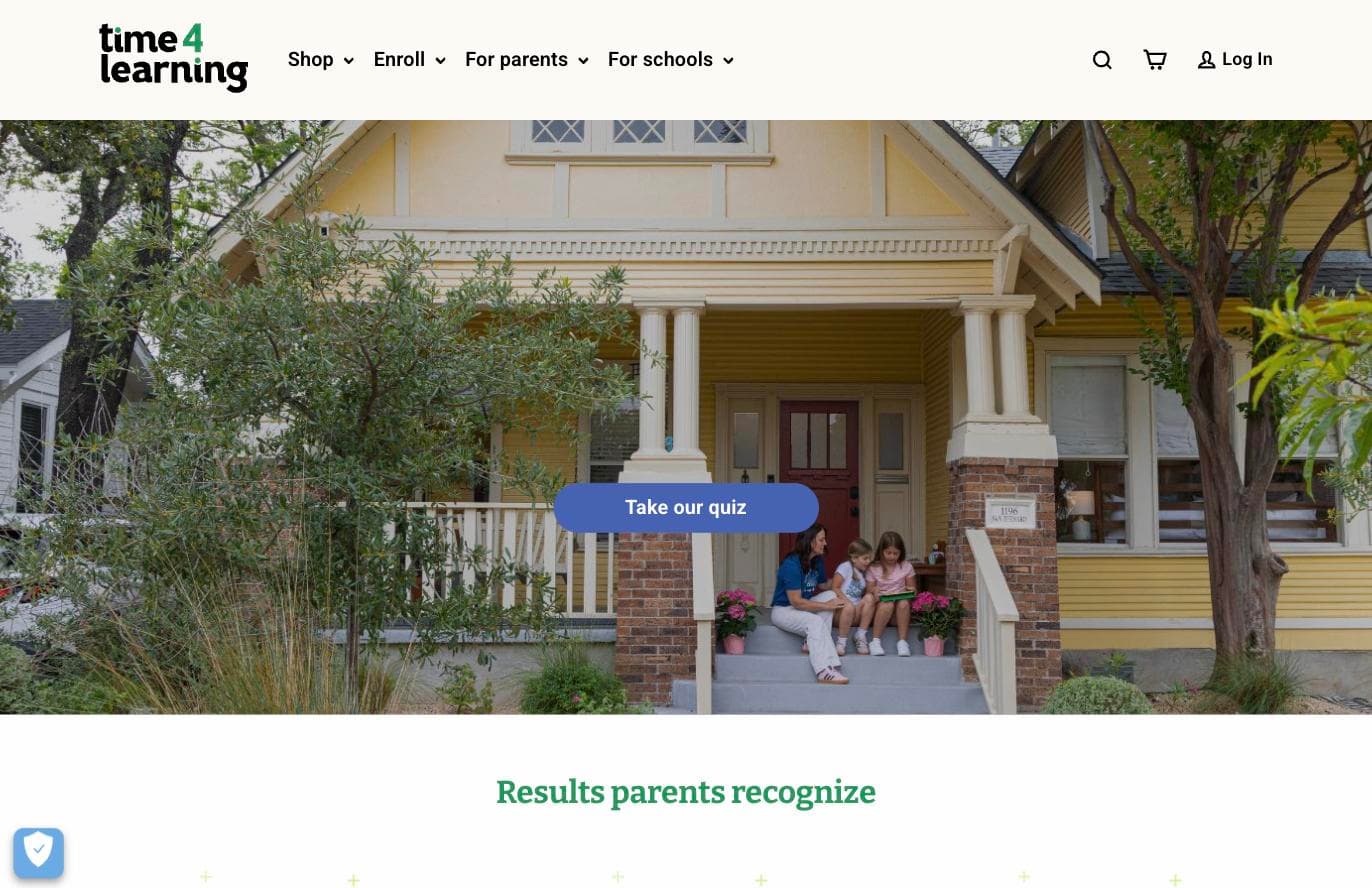
Time4Learning ($39.95/month per student, about $479/year, PreK-12, secular). The category default, and still the most structured way to cover math, language arts, science, and social studies in one login. The rate is the same at every grade from kindergarten through twelfth, which is unusual, and multi-student discounts scale properly: 10% off for two children, 20% for three to five, 25% for six or more. Automatic grading and printable reports make record keeping nearly effortless. Two honest notes, and they are significant. Longtime users report that the newer lesson series contains AI-generated content that was never disclosed as such, including AI-scored written responses that tell a student the answer is wrong without explaining why. And the loudest complaint on this platform is not academic at all, it is billing: annual plans that do not refund, charges landing after cancellation, and a cancellation flow that requires replying to the confirmation email a second time before it takes. Strongest in elementary and middle grades. Pay monthly, and use the trial before you judge it.
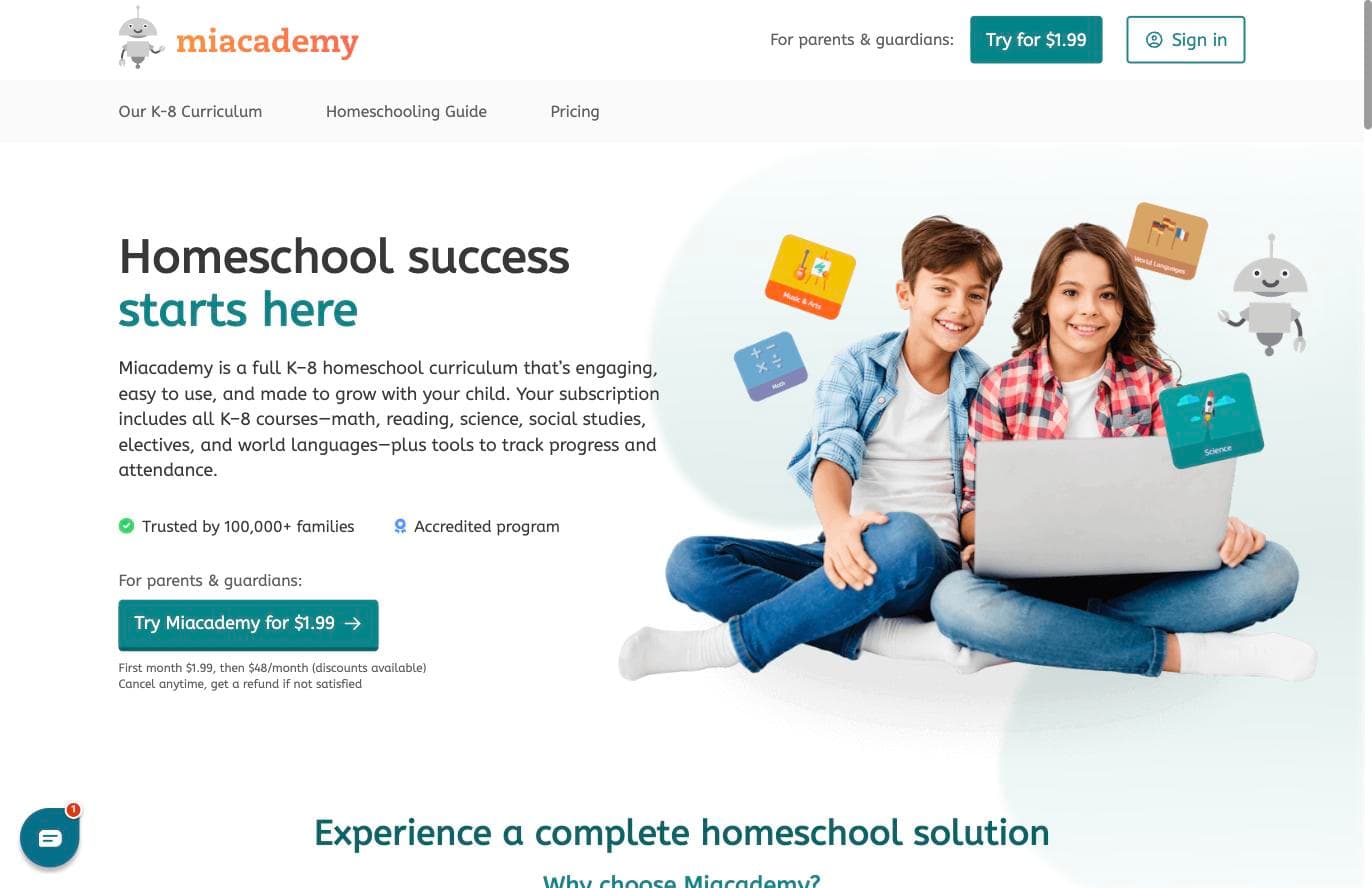
Miacademy ($48/month or $516/year, K-8, secular) and MiaPrep (grades 7-12). The current community favorite among all-in-ones. Lessons are game-based enough that kids ask to do school, and each subject can be set to its own grade level, a real gift for the child who reads two years ahead and computes a year behind. The first month is $1.99, the cheapest test drive on this page, and there is a Family Lifetime option at $2,598 covering up to four students that pencils out for large families staying put. MiaPrep, the high school extension, publishes only a $9.95 first month; the standard rate sits behind registration, so ask before you plan around it. Two caveats parents repeat almost word for word. It runs easy, particularly in math and language arts, so most families supplement both. And it works when you print the worksheets and stay in the loop; treat it as a babysitter and gaps form quietly. Older students sometimes report the presentation feels aimed at younger kids, which is worth testing before you buy a year for a seventh grader.
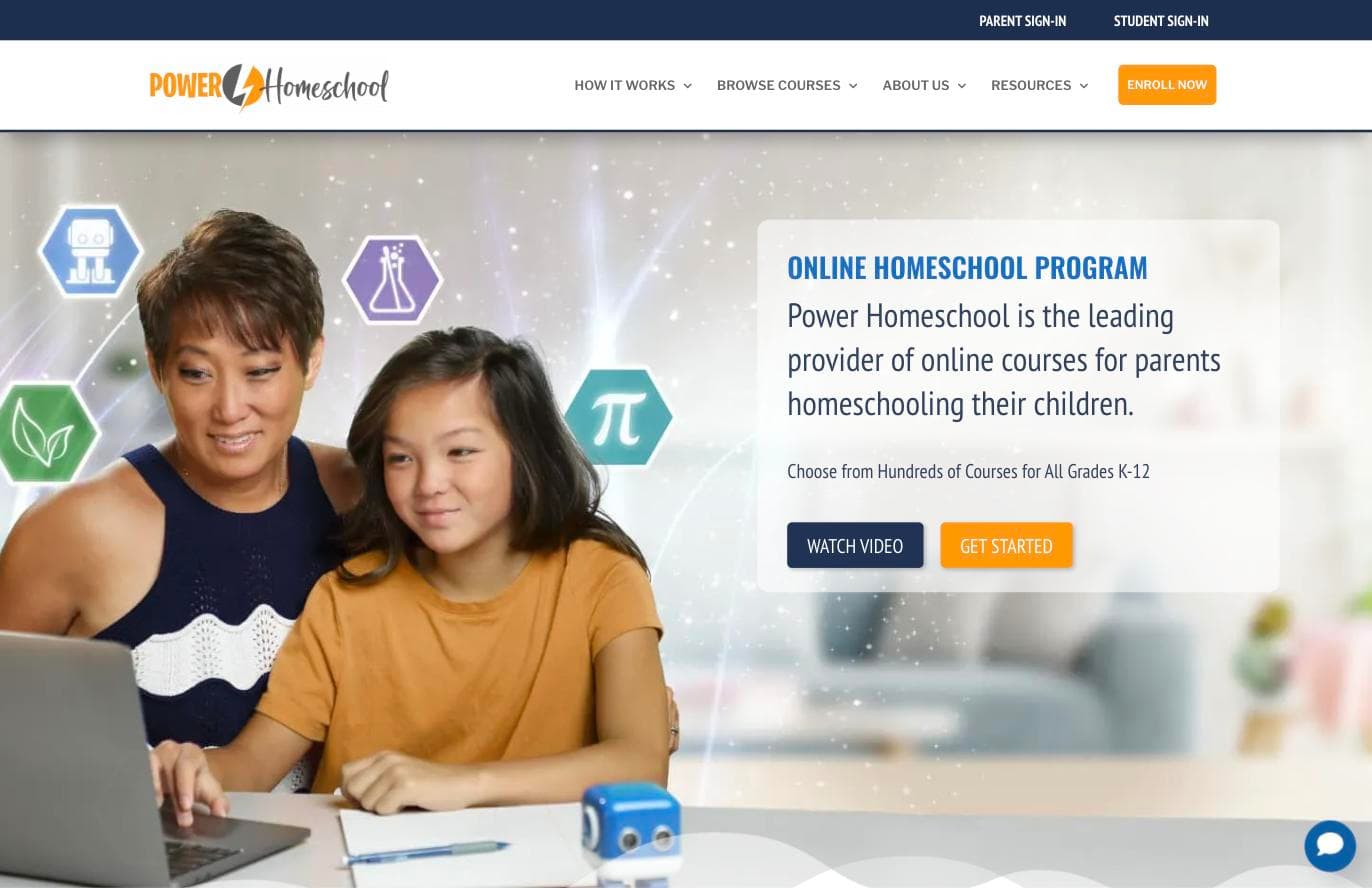
Power Homeschool ($99/month per student, PreK-12, secular). The parent-directed version of Acellus, covering up to six courses at a time with free course swaps. Its superpower is that you can start any week of the year, which is why so many families grab it for a mid-year pull-out. The enrollment page currently leads with $79 a month after a scholarship application, so the sticker figure is negotiable in practice. Three things to know before you commit a year. Parents report the rate jumped from roughly $31 a month to $99 in August 2025 with a few days' notice, which is the sharpest price move anyone on this page has made. "Self-paced" has limits: families describe weekly caps on how many lesson steps a student may complete, tightened mid-year, which strands kids who were working ahead. And Acellus content has drawn sustained, well-circulated criticism in homeschool forums, including from former students, over factual errors and specific lesson material. Those complaints sit on the first page of search results for a reason. Preview lessons in the subjects you care about, yourself, before subscribing.
SchoolhouseTeachers ($389/year for the entire family, PreK-12, Christian). The quiet answer to the per-child pricing problem. One membership covers every child in the house across hundreds of courses, plus recordkeeping tools and a World Book Online subscription. It is mostly parent-led rather than auto-graded, so budget your own time accordingly. For a family of four, it is roughly a quarter what four Time4Learning seats would cost.
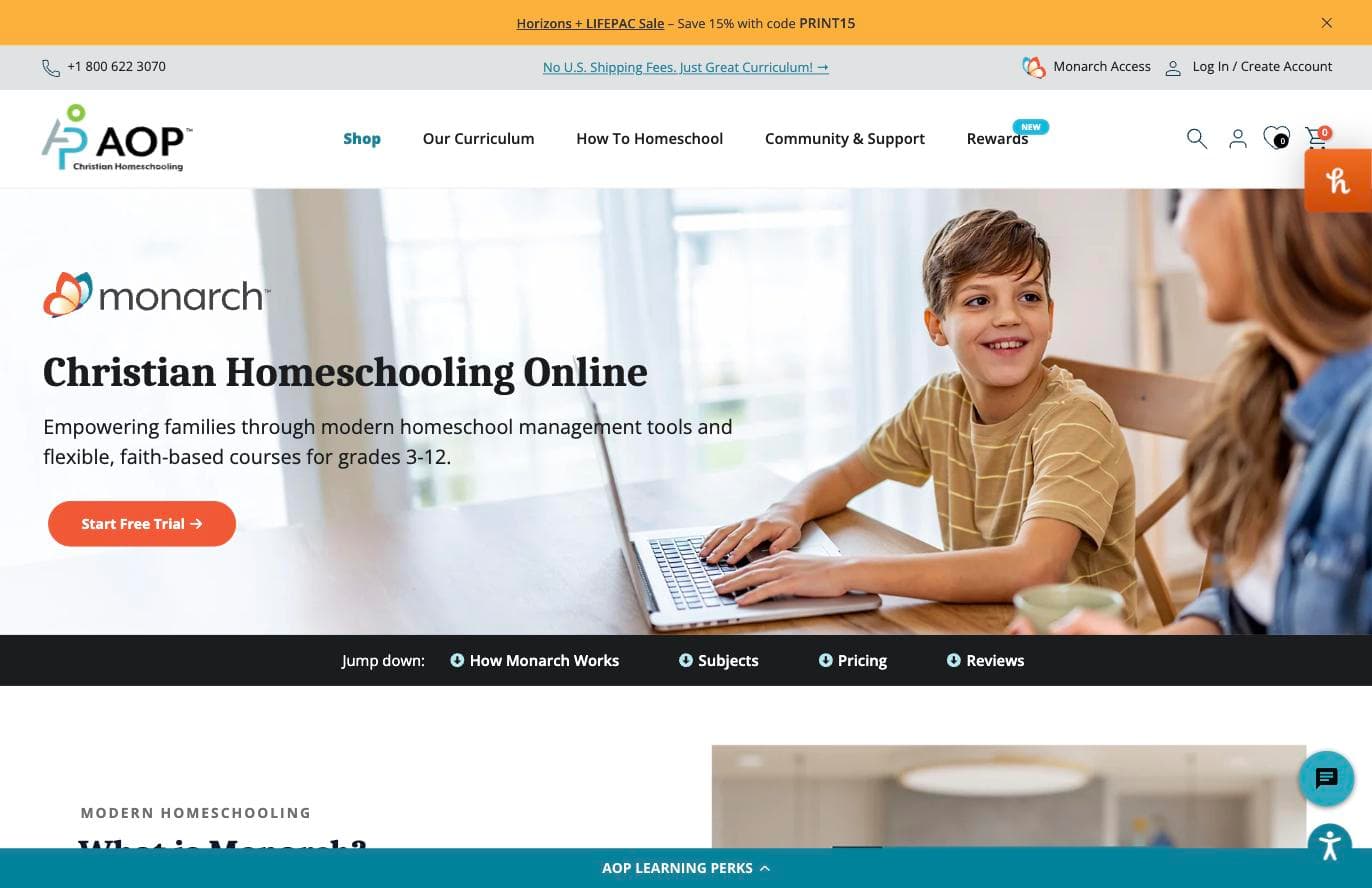
Monarch ($439.95/year or $43.95/month, grades 3-12, Christian). Alpha Omega's online curriculum, with more than 85% of work auto-graded and a 30-day free trial that is genuinely free. Single courses run $10.95 a month or $109.95 a year, which makes it a sensible way to buy one subject rather than a whole program. It is widely accepted by ESA programs. Two honest notes: it is the paperless edition of AOP's long-running LifePac workbooks, and some evaluators report students retain less from the screen version than from the paper one. The Bible-integrated worldview is either the point or a dealbreaker, so read a sample lesson before deciding.
Free Online Homeschool Curriculum That Is Genuinely Complete
Free is not the budget shelf in this category. Two of the highest-ranking results for "online homeschool curriculum" are free programs, and some of the most respected material in homeschooling costs nothing. The tradeoff is parent assembly, not quality.
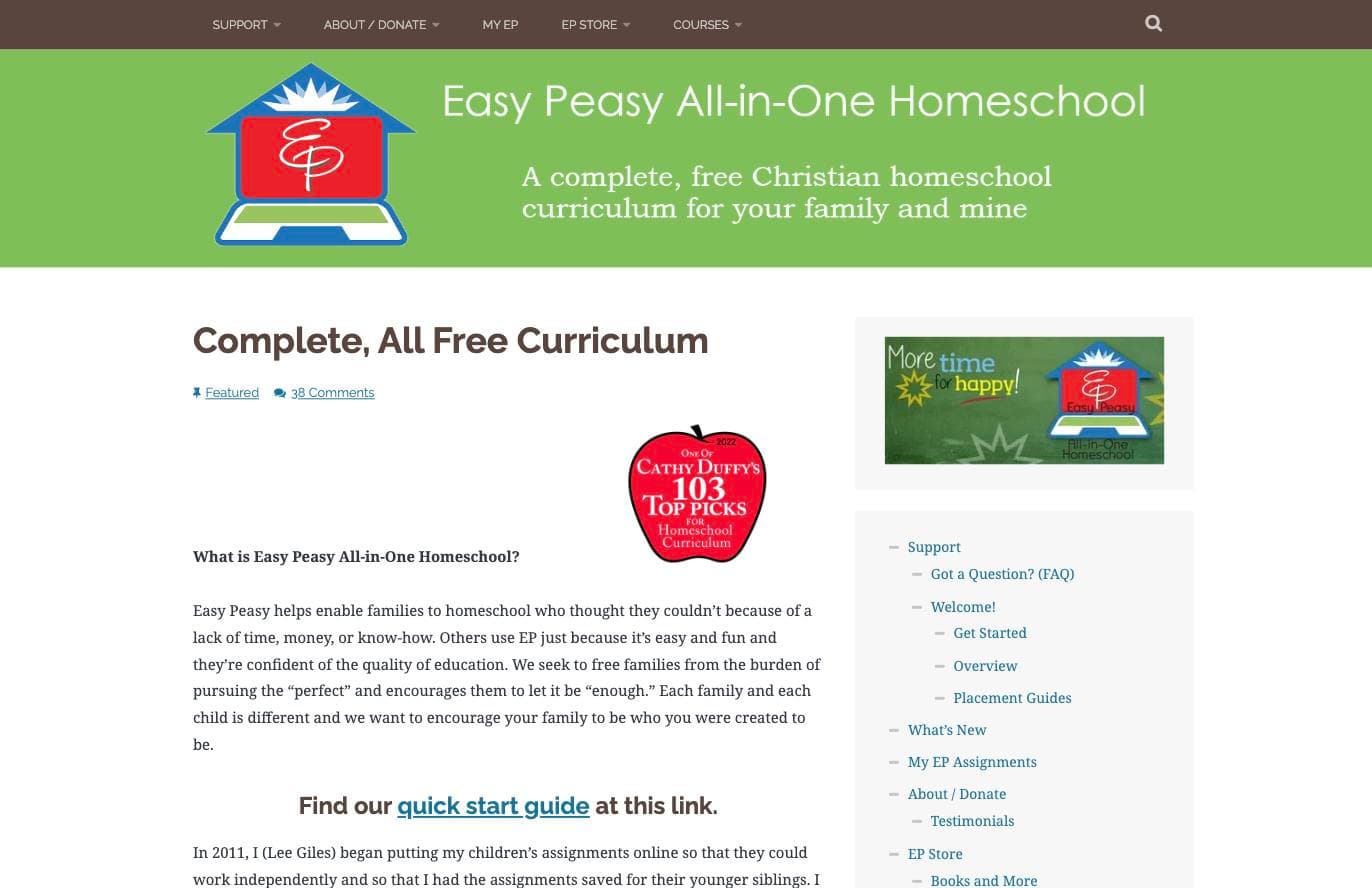
Easy Peasy All-in-One (free, K-12, Christian). A fully planned, day-by-day curriculum covering every subject at zero cost, written by a homeschool mother and run for years by thousands of families. Everything the child needs sits on a daily assignment page. It is written from a conservative Christian, young-earth perspective; secular families commonly swap out science and history and keep the rest. Optional paid offline workbooks exist, and the high school years live on a separate site.
AmblesideOnline (free, K-12, Charlotte Mason). A volunteer-built, completely free Charlotte Mason curriculum organized around living books, most of them public domain and readable online. This is a plan, not a platform: there is no login, no auto-grading, and no video. What you get is a rigorous, literature-heavy scope and sequence with a booklist for every week of twelve years, which is exactly what some families want and exactly what others find overwhelming. Pair it with a math program, because it does not include one.
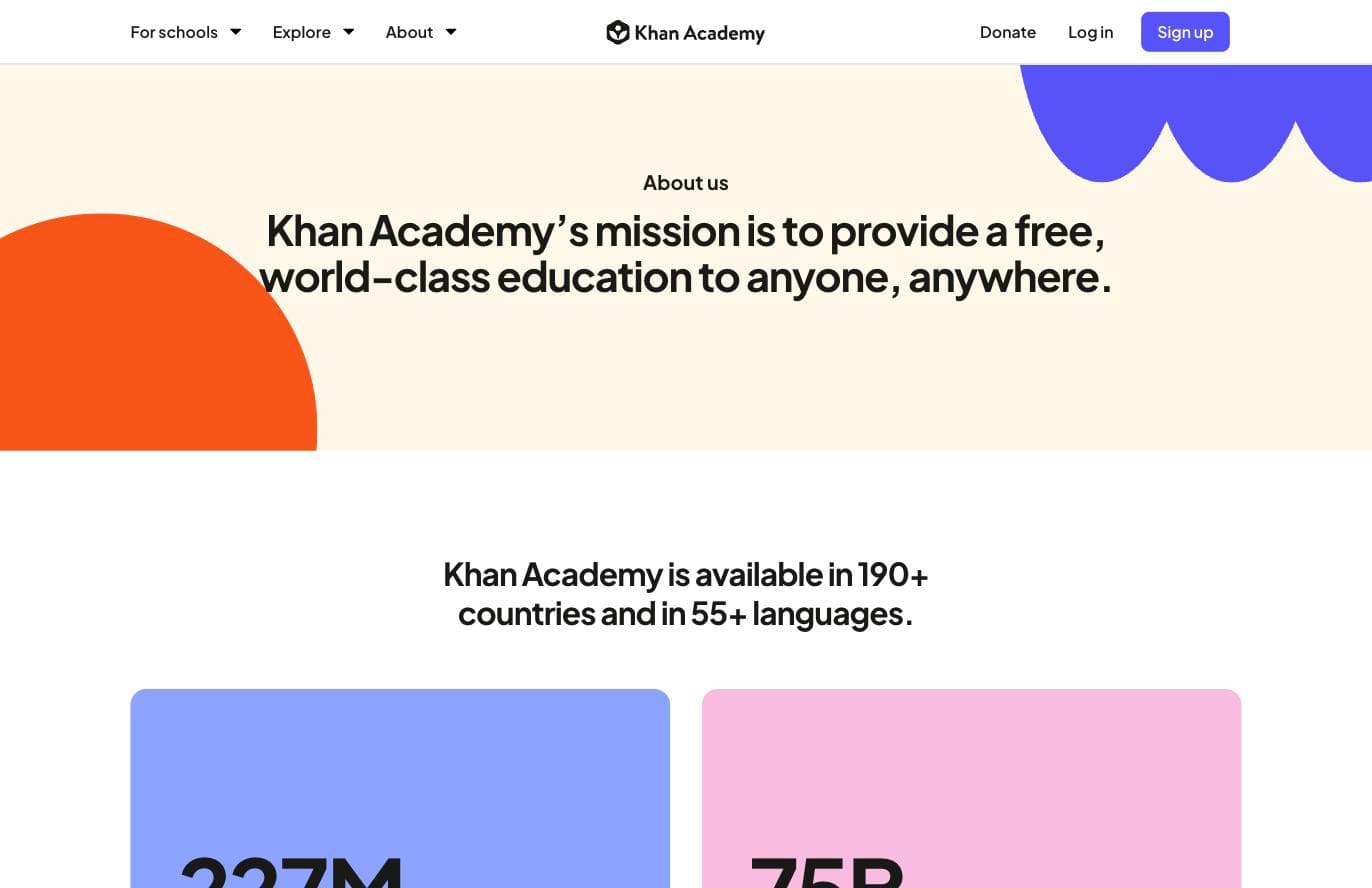
Khan Academy (free, K-12, secular). The best free math spine available, plus solid middle and high school science, economics, and test prep, all auto-graded. Be clear-eyed about the shape of it: Khan is instruction plus practice, not a full curriculum. Language arts coverage is incomplete and the early elementary years are thin. Use it as your math backbone, or as the fix-it tool when a concept refuses to stick. One caution from families who leaned on it hardest: mastery bars can read as on-level while the understanding underneath stays procedural, so pair it with problems that are worded differently from the practice sets. Khan reports 227 million registered users to date and nearly 105 million learners in the 2024-25 school year alone[8], which is why so many state programs recognize it.
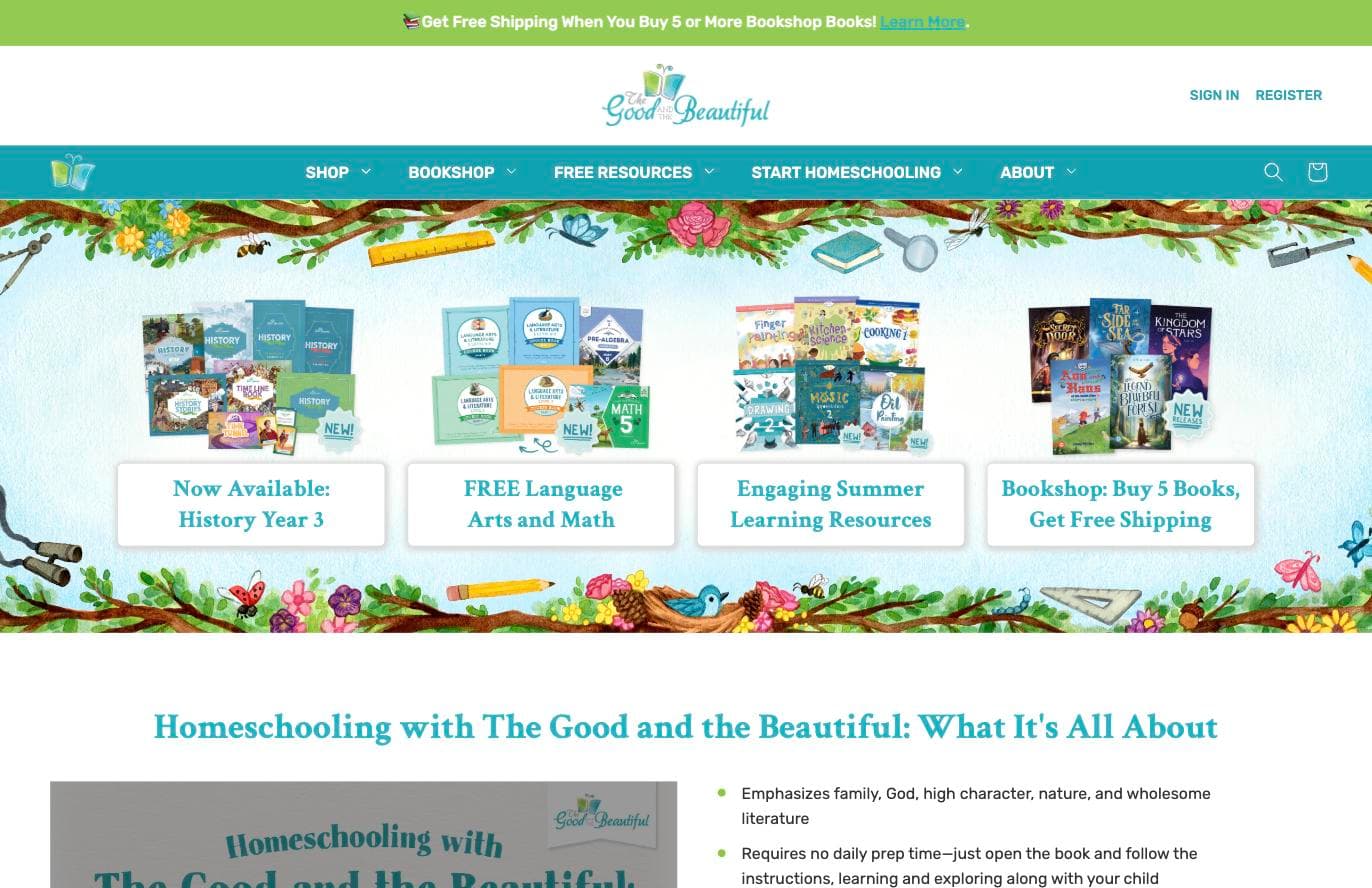
The Good and the Beautiful (free PDFs, PreK-8, Christian). Full-year language arts and math courses download free, along with a free marine biology course and a free practice app. Printed sets run roughly $17 to $99 per course. Content is interdenominational Christian throughout. Two things buyers consistently report: customer support has slowed as ESA-funded demand swamped the company, so order printed materials early, and the math is light on practice for the price of being gentle. Many families use it as a confidence-building on-ramp in year one and move to a heavier math program by year two.
Beyond those four, the free layer is worth assembling by subject:
- Math: Khan Academy for K-12, plus Prodigy or Xtra Math for drill.
- Science: CK-12 for interactive middle and high school STEM, OpenStax for free high school and college-level textbooks.
- Language arts: Easy Peasy or The Good and the Beautiful through grade 8; free classic texts from Project Gutenberg above that.
- History: AmblesideOnline's booklists, run through your library card.
- Full program: Easy Peasy, AmblesideOnline, or Discovery K12, which offers a free online curriculum with an optional paid parent account.
A dedicated free-curriculum guide is in the works. For now, the honest summary is that a determined family can run a complete, rigorous K-12 education for the cost of a library card and an internet connection, and a meaningful number do.
Christian Video Curriculum: The Traditional Heavyweights
Two publishers dominate the full-video Christian lane, both descended from decades of Christian school publishing, and both sell more than one thing under one brand.
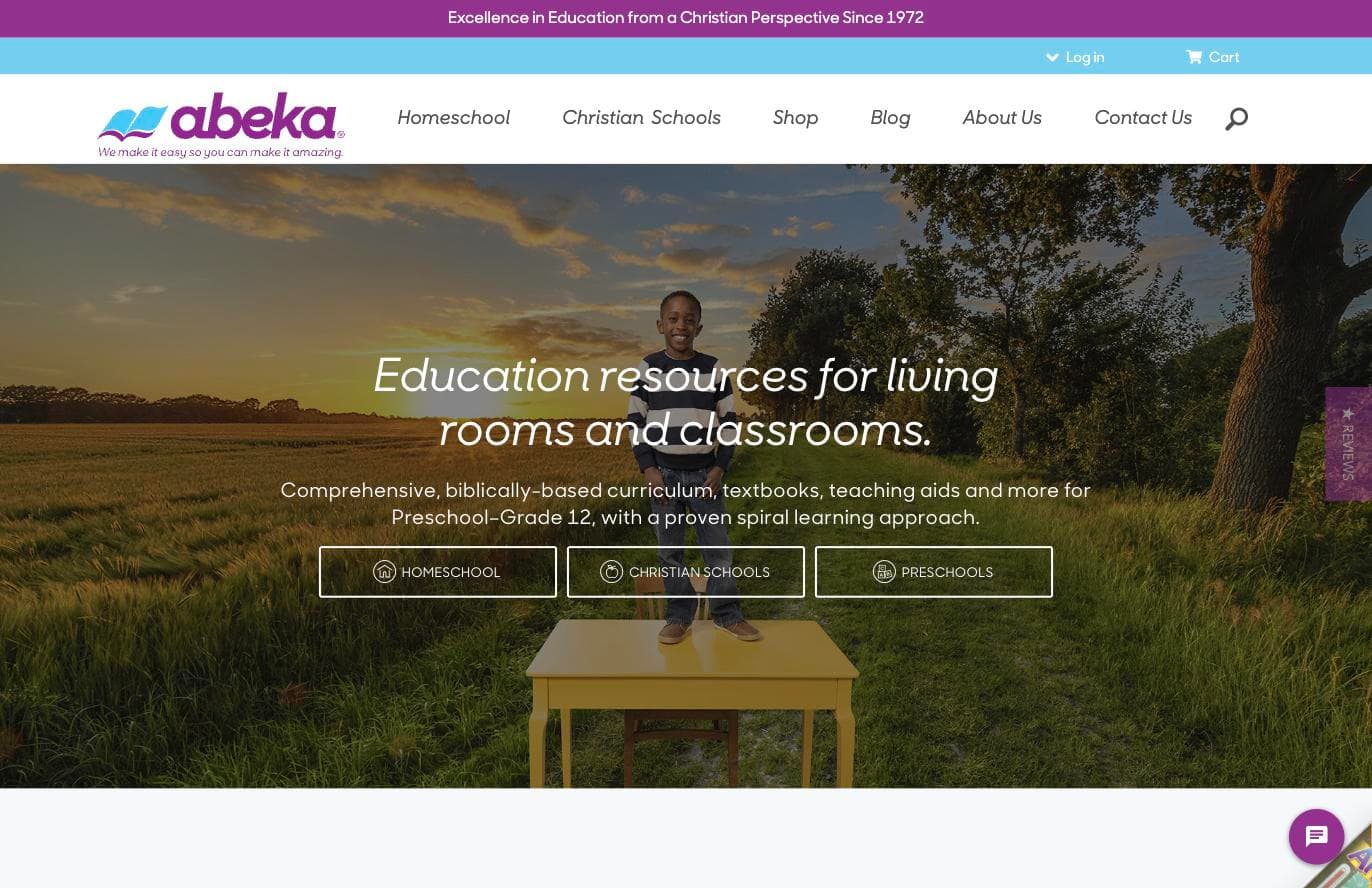
Abeka (K4-12). Pricing here needs unpacking, because a single headline number for Abeka is always wrong. Parent-directed print kits, where you teach, run roughly $398 for a full first-grade child kit up to about $1,204 for a twelfth-grade student and parent set. Abeka Academy, the streaming-video option with recorded classroom teachers, is billed monthly across ten months and lands somewhere between roughly $444 and $1,884 a year depending on grade, whether you take books with the video, and whether you choose the accredited track. The accredited track is an enrolled program with a school of record, not curriculum, and belongs to our online homeschool programs comparison. The approach throughout is traditional, rigorous, and drill-friendly. Payment plans are available. The complaint families raise most often is not academic but temporal: the video option can run five hour-long lessons a day before written work, and parents describe tracking assignments in their own spreadsheets. It is not the time-saver the format suggests.
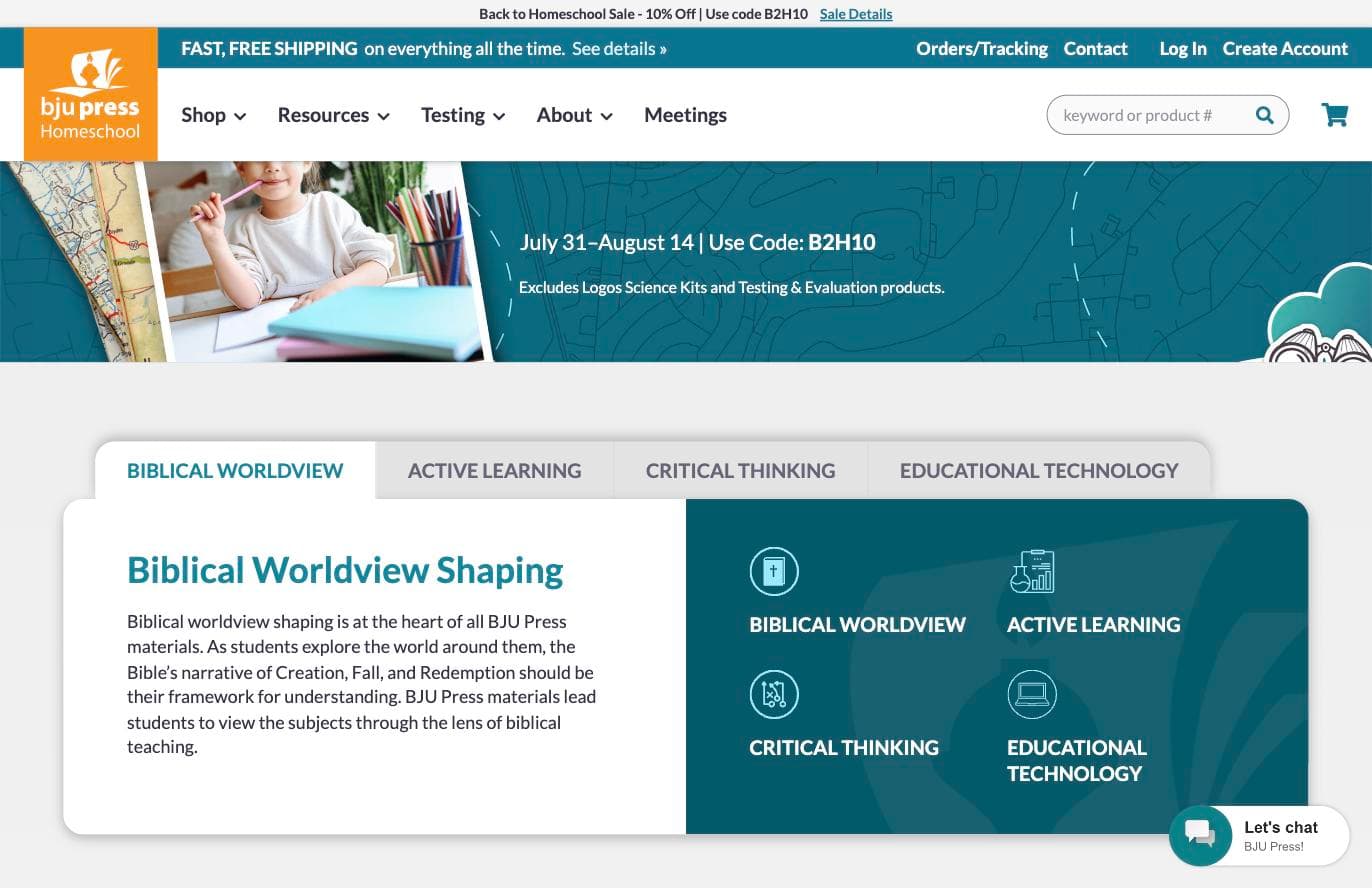
BJU Press ($979/year digital, $1,149 with print, K3-12). Streaming video instruction with strong academics and a Christian worldview woven through every subject, and the better-liked of the two on the day-to-day measures that matter: families report finishing in roughly four hours, teachers who hold a child's attention, and instant grading on quizzes and tests from grade 5 upward. Below grade 5 the marking is meaningfully yours. Multi-kit discounts help larger families.
Two pointers for readers sorting worldview. If Christian materials are what you want, our guide to faith-based homeschooling covers the wider landscape, with dedicated comparisons of Catholic homeschool curriculum and homeschool Bible curriculum. If you want the opposite, be aware that "secular" labels deserve a spot check in this market: Easy Peasy is free and complete but not secular, and several nominally neutral platforms lean noticeably in their history content. Our secular homeschool curriculum guide sorts that properly. Either way, read one science lesson and one history lesson before assuming anything.
Live and À-la-Carte: Online Classes for Homeschoolers
Everything above is asynchronous: your child works alone, whenever. The other half of the online category is live instruction, and it solves problems self-paced platforms cannot. A real teacher can respond to an essay. A scheduled class creates accountability for a child whose executive function is not yet up to running their own week. A discussion section gives an only child someone to argue with about a book.
Outschool is the marketplace most families start with: tens of thousands of live small-group classes taught by independent instructors, priced per session or per week. Sampled listings run roughly $15 to $110, and there is now a credit-based membership layer running from $40 a month (about one group class a week, first month free) up to $600 a month for around ten. That membership shift is unpopular with longtime users, who find the credit pricing hard to translate into dollars per class and object to credits that expire, so do the arithmetic on your actual class count before subscribing. Quality also varies enormously by teacher, which is the honest tradeoff of a marketplace: read the reviews, treat the first class as a trial, and check whether the class expects cameras on. A live class where every camera is off delivers the schedule but not the peer group, which was usually the point.
Homeschool Connections runs live and recorded courses for grades 3 through high school from an explicitly Catholic perspective, with a catalog that runs from accounting to zoology. Pricing sits behind their catalog registration.
Veritas Press Self-Paced occupies the middle ground, offering recorded classical Christian courses in history, Bible, Omnibus, and rhetoric, with a 45-day money-back guarantee.
Most families do not choose live or self-paced. They run a self-paced core and buy one or two live classes for the subjects where feedback matters most, which in practice means writing, upper-level math, and any language you do not speak. Budget accordingly: two live classes a year can cost as much as a full self-paced platform.
Single-Subject Standouts, and Why Veterans Build Stacks
Ask experienced homeschoolers what they actually use and a pattern emerges fast: the highest-quality online instruction is often single-subject, and most veteran families run a stack rather than one platform.
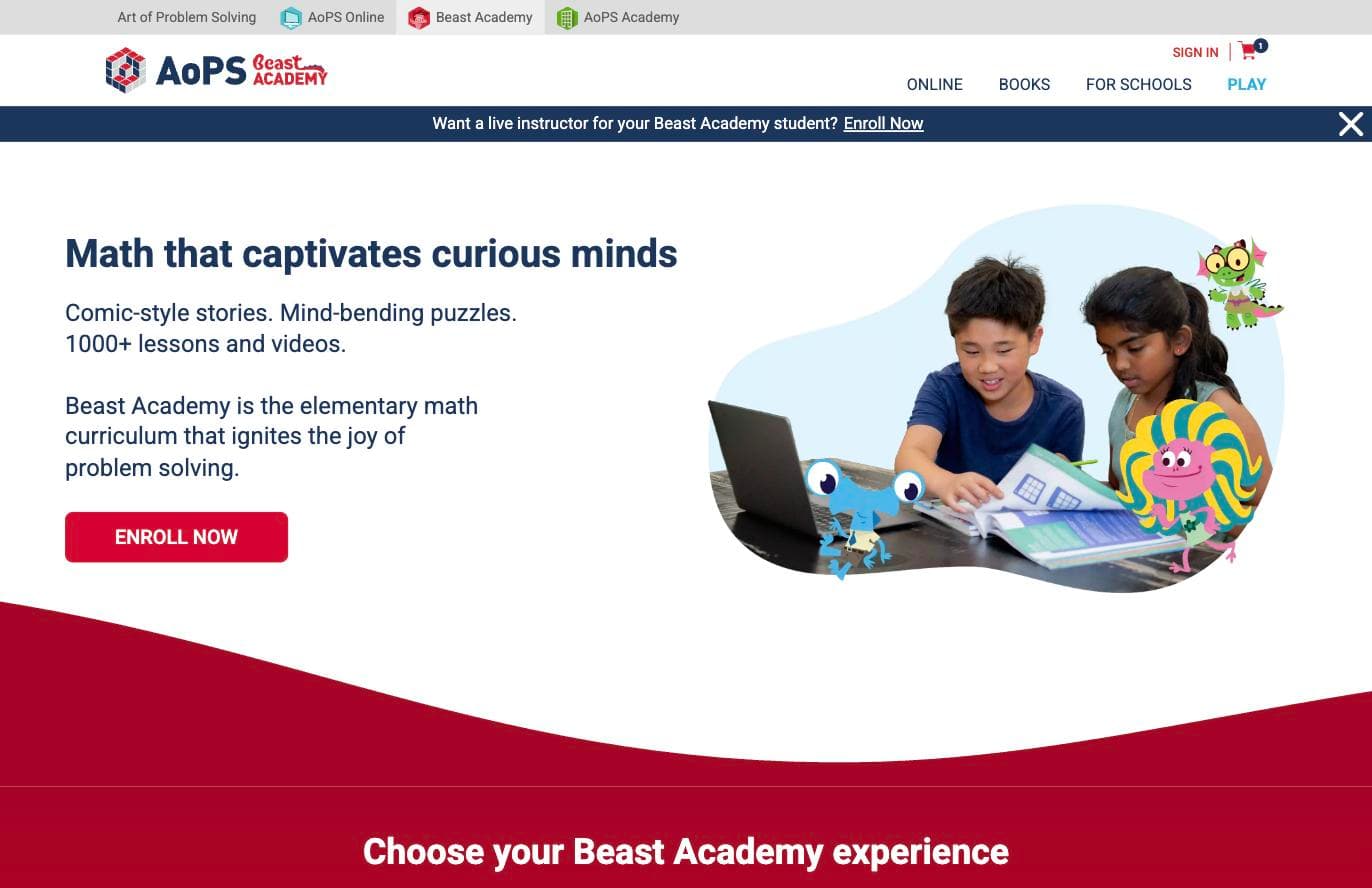
Beast Academy ($16/month or $100/year, ages 6-13, math). The strongest online math on this page for kids who like a challenge. Puzzle-driven problems deliver what one parent memorably called sneaky drill, rigor disguised as play. Note two corrections to what you will read elsewhere: a subscription covers all of Levels 1 through 5 rather than a single grade, and additional children are $10.99 a month. There is no free trial, only a 14-day refund window. Built for kids who enjoy wrestling with problems; easily frustrated learners may melt down, and younger students need a parent within arm's reach.
Teaching Textbooks (grades 3 through pre-calculus, math). The other half of the math conversation, and the temperamental opposite of Beast Academy. Every problem is auto-graded instantly with a step-by-step audiovisual solution, which is why it is the go-to for independent workers and for parents who dread teaching math. Pricing is not published on the public site, but the trial is the most generous in homeschooling: the first 15 lessons of any level, free, with no expiry and no card required. Two warnings that the marketing will not give you. It is widely reported to run about a year behind a standard scope and sequence, so place by the placement test rather than by grade. And because a student can retry a problem and keep the higher mark, a child can finish with a 95 average and very little retention. Watch the paper, not the gradebook. Our math curriculum guide compares both against the print options.
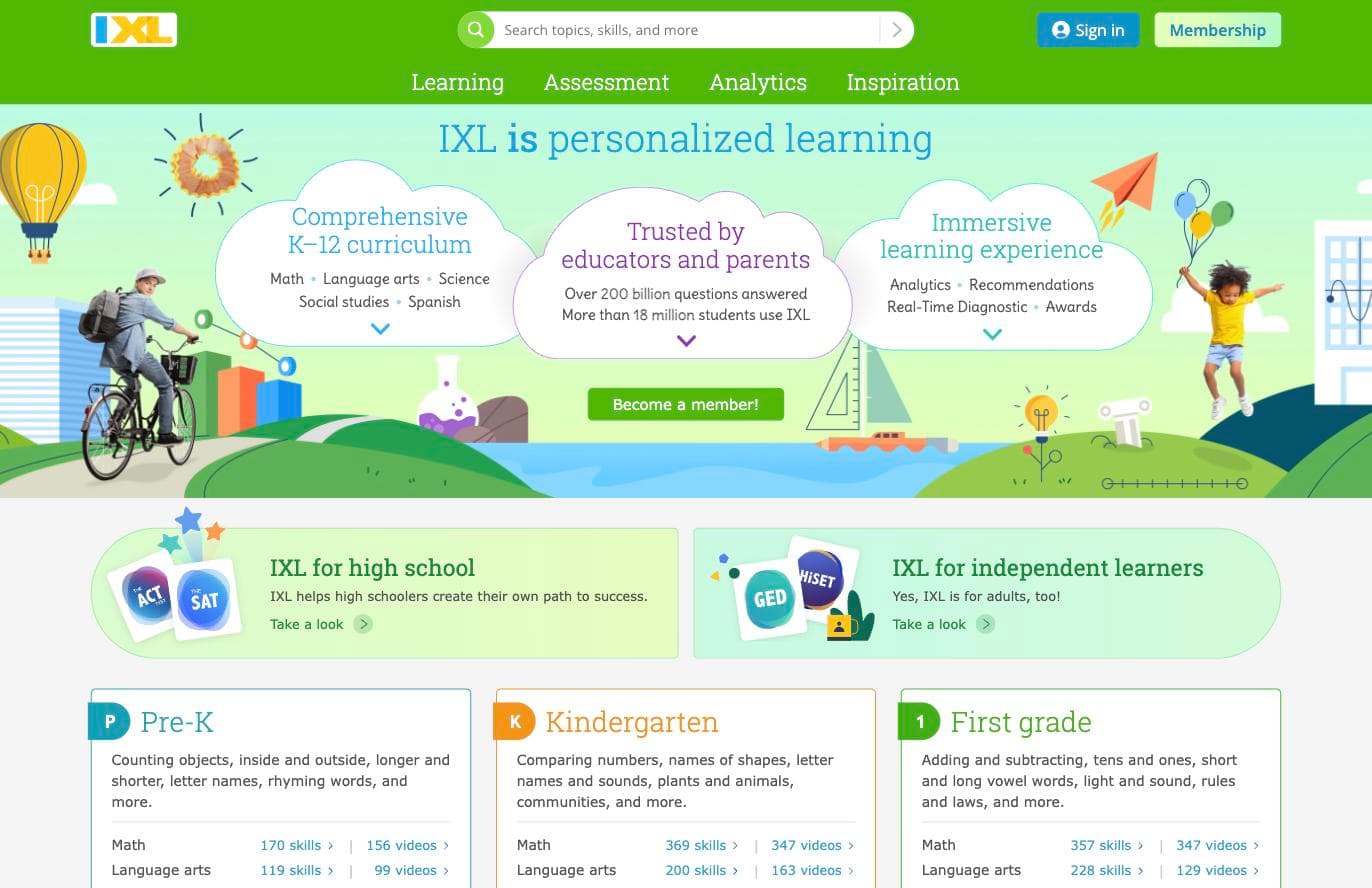
IXL ($9.95 to $19.95/month depending on subjects). Understand what IXL is before subscribing: practice and diagnostics, not instruction. It will not teach a concept your child has not met. Tiers run $9.95 a month for math or language arts alone, $15.95 for both, and $19.95 for the four core subjects. As a gap-finder and drill layer underneath real teaching it earns its fee, and its reports double as instructional-time logs in states that count hours. Know about the SmartScore before you hand it to a sensitive child: a single wrong answer near the top of a skill drops the score sharply, and it is the most common reason parents describe tears at the kitchen table. Set a time limit rather than a score target.
Science and early literacy. Generation Genius ($325/year, K-8) covers science, math, and now ELA in short video lessons with printables, and appears on several state ESA vendor lists. Mystery Science ($199/year for families, K-5) is the more open-and-go option for elementary science. Reading Eggs is the standout for early literacy at $99.99 a year for reading and math, covering up to four children with a 30-day trial. Our science curriculum guide goes deeper on the full-course options.
The tradeoff of a stack is administration: three logins, three progress reports, and three renewal dates, multiplied by each child. That is a real cost, and it is the one nobody prices in.
Subject Coverage at a Glance
The Accreditation Question, Answered Precisely
Here is the fact that instantly separates good information from marketing: a curriculum cannot be accredited. Accreditation is granted to institutions by agencies such as Cognia, WASC, and the Middle States Association[5], and it attaches to the school, never to the materials[6]. When a site advertises "accredited online homeschool curriculum," it means the publisher also operates an accredited school you can enroll in, or the copy is simply sloppy. Acellus is the cleanest illustration: the same lessons are unaccredited when you buy them through Power Homeschool and part of a WASC-accredited school when you enroll in Acellus Academy.
Two follow-up facts save families real money. No state requires homeschoolers to use accredited materials[2]. And accreditation is not a rigor signal. Some accredited programs run below grade level, while several of the most respected curricula in homeschooling carry no accreditation at all.
So when does it matter? If your child may return to a brick-and-mortar school, credits transfer more smoothly from an accredited school, though any school can accept or reject transfer credits at its discretion. And if you want a diploma and transcript issued by an institution rather than by you, you are shopping for an enrolled online school or an umbrella school, not a curriculum.
Paying for Online Curriculum With ESA Funds
If you live in one of the states running education savings account programs, your curriculum budget may not come out of pocket. EdChoice currently counts 21 ESA programs across 18 states serving roughly 489,000 students[3], and online curriculum subscriptions sit squarely inside the standard eligible-expense categories of online education programs and instructional materials. In Arizona's program, curriculum and supplemental materials together account for nearly half of marketplace spending[7].
Three habits keep the funding smooth. Buy through your state's approved-vendor process rather than paying up front and hoping for reimbursement. Keep every receipt, because audits happen. And map subscription renewal dates against your award period so an auto-renewal does not land outside an eligible window, which is the single most common way families lose money they had already been granted.
Several providers on this page actively court ESA families and appear on multiple state vendor lists, Monarch and Generation Genius among them. Vendor lists differ state to state, so confirm your specific provider before subscribing rather than after.
What Families Wish They Had Known
The most useful review data does not come from review sites. It comes from parents three months in, and their lessons repeat with remarkable consistency:
- Self-paced does not mean hands-off. The families thriving on online curriculum sit nearby, print the worksheets, and answer questions. The ones who treat the platform as a babysitter discover the gaps at evaluation time.
- Kids learn to game platforms. A finished progress bar is not mastery. Retake buttons, answer keys on study-flashcard sites, and now chatbots make it trivial, and children find all three fast. Spot-check weekly with off-screen questions, and treat a spotless gradebook as a prompt to look closer rather than a result.
- Almost every all-in-one is weak on writing. Composition cannot be meaningfully auto-graded, so it is the first thing platforms skimp on. Budget for a separate writing program, a live class, or your own red pen from day one.
- Screens are a poor fit below third grade. This is close to unanimous even among parents who like these products. Early reading and early math go better on paper with an adult beside them; save the platform for when a child can work a page independently.
- Vet the content, not just the features. Every major platform has a search-results trail of parent complaints about specific lessons. Spend twenty minutes reading it before you spend a year's tuition.
- Watch the billing. Surprise renewals, quiet price increases, and money-back guarantees that quietly exclude annual plans all show up in parent forums, and completed work usually disappears when a subscription lapses. Calendar your renewal date the day you subscribe, read the cancellation steps before you need them, and export progress reports before you cancel anything.
- Hardware matters more than expected. A used Chromebook outperforms a tablet on nearly every platform, and PDF-heavy programs quietly require a reliable printer and more paper than you think.
- Screens do not have to fill the day. Most families cap online curriculum at two to three focused hours and spend the rest of the day off-screen: books, projects, outside.
Before You Subscribe: A Six-Point Sanity Check
- Confirm you are buying curriculum, not enrollment
If a teacher, transcript, or diploma is included, you are looking at a program or an online school, and the comparison set is different.
- Decide self-paced or live before you compare prices
A child who stalls without a schedule will stall on any self-paced platform, no matter how good the lessons are.
- Check who does the grading
Auto-graded costs you supervision time. Parent-graded costs you teaching time. Know which one you have room for this year.
- Price it per family, not per platform
Multiply by every child, add every subject you will still need to buy separately, then compare against per-family options.
- Run the trial with real work, not a tour
Two weeks of actual lessons tells you what a demo never will: whether your child is learning or just clicking through.
- Note the renewal date and the export path
Write both down the day you subscribe. Progress reports you cannot download are progress reports you do not have.
The Bottom Line
Online homeschool curriculum is not one product, and that is why the search is so confusing. It is a self-paced platform, a free published plan, a single-subject specialist, and a live class, four different purchases sharing one phrase. Sort which one you actually need, confirm you are buying materials rather than enrollment, then use the tables above to compare on the dimensions that determine your week: who grades, who pays per child, and what happens when you cancel. Start with the cheapest honest test, a trial month on one subject, and watch whether your child is learning or just finishing. Switching later is not failure; monthly billing makes course corrections cheap. If your state's rules are the part that worries you, talk it through with us, and whatever stack you land on, Numa holds the compliance, records, and planning together while you focus on the teaching.
Frequently Asked Questions
Ready to simplify your homeschool?
Numa helps you track compliance, manage records, and plan your curriculum—all in one place.
Sign Up