



Key takeaways
- "Online homeschool program" covers three very different things: free virtual public schools, accredited online private schools, and self-paced curricula you run yourself
- Full-time virtual schooling has nearly doubled since 2019. About 1.8% of U.S. students now attend school fully online, alongside the 3.4% who homeschool[1]
- No state requires an accredited program to homeschool. Accreditation matters mainly for high school credit transfers and NCAA athletic eligibility[2]
- Budget $200 to $3,500 per year for most paid programs. ESA funds in 18 states can offset the cost for many families[3]
Search for online homeschool programs and you'll find a dozen rankings that all skip the same three things: what each program actually costs, who accredits it, and how much of your day it will eat. Those are the questions that decide whether a program works for your family.
This guide answers them. Homeschooling grew another 5.4% on average across reporting states in 2024-25[4], and online options are multiplying faster than anyone can vet them. Below you'll find the ten programs worth your attention in 2026, with verified pricing, named accreditors, honest pros and cons, and the enrollment traps experienced families warn each other about in forums but review sites never print.
The Three Kinds of "Online Homeschool Program"
Before comparing programs, sort out what category you're shopping in. Most frustrated reviews trace back to a family who bought one category thinking it was another.
Virtual public schools (K12-powered state schools, Connections Academy) are free because they're public school at home. Your child is a public school student with required attendance, scheduled live classes, and state testing. Legally, this is not homeschooling, and HSLDA cautions that parents in these programs act as "learning coaches" with little control over curriculum[2]. Families who want free structure love them. Families who came for flexibility often withdraw within the year.
Accredited online private schools (Bridgeway, Keystone, Abeka Academy, Oak Meadow) enroll your child, assign teachers or advisors, keep records, and issue transcripts and diplomas. You're buying legitimacy and support. The tradeoff is cost and, in some programs, pacing rules that surprise families expecting total freedom.
Self-paced curriculum platforms (Time4Learning, Miacademy, Khan Academy) deliver lessons and grading, but you remain the school. You handle state compliance, records, and transcripts yourself. They're the cheapest and most flexible, and the reason "is it accredited?" is the wrong question to ask about them. Curricula can't be accredited. Only schools can.
The Three Categories at a Glance
How We Ranked the Best Online Homeschool Programs
Every program below was scored on five things: current 2026 pricing (verified against official pages, with ranges where programs quote individually), accreditation (the actual agency, not a yes/no), format, parent workload, and billing fairness, meaning trials, refunds, and whether you can pause or cancel monthly. All prices are shown per year so you can compare honestly, with monthly billing noted where it exists. Prices change, so confirm on the program's site before enrolling.
New to homeschooling entirely? Our guide on how to start homeschooling walks through the legal groundwork this article assumes.
2026 Comparison: Pricing, Accreditation, and Format
1. Numa: Best All-in-One Homeschool Program
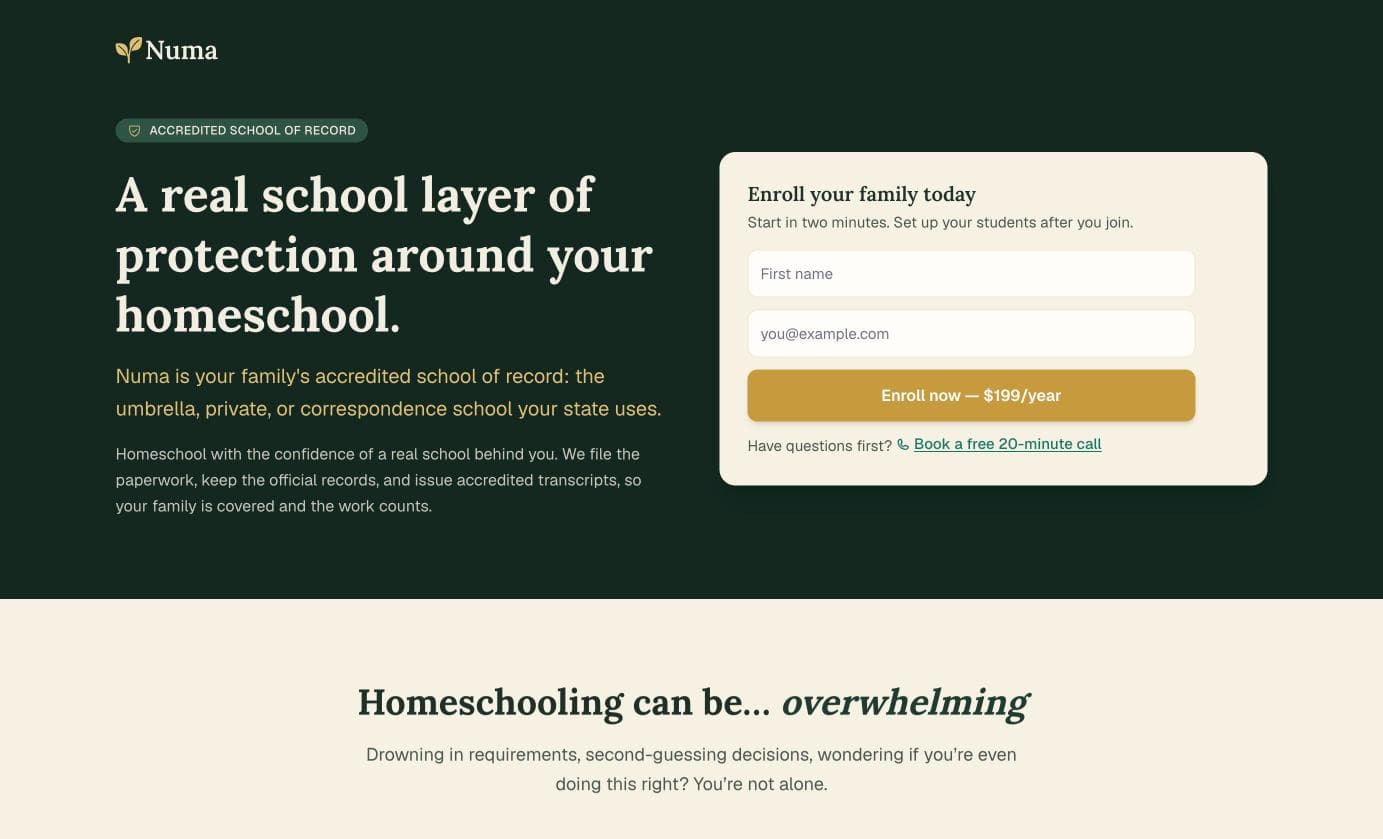
Numa takes a different approach from everything else on this list, which is exactly why it leads it. Instead of selling curriculum, Numa is the program around whatever curriculum you choose: enrollment with an official school of record, state compliance requirements auto-populated for your state, attendance and record-keeping, transcript generation, curriculum planning mapped to requirements, ESA budget tracking, and a parent community. At $199 per year for the family, it costs less than a single month of most online academies.
Pros: every "school" function handled in one place; works with any curriculum; by far the lowest cost for what it covers.
Cons: it doesn't include the lessons themselves. You still choose teaching materials, which is a feature for veterans and a decision point for beginners.
Best for: families who want to pick their own curriculum without also becoming a full-time school administrator.
2. Time4Learning: Best-Known Self-Paced Curriculum
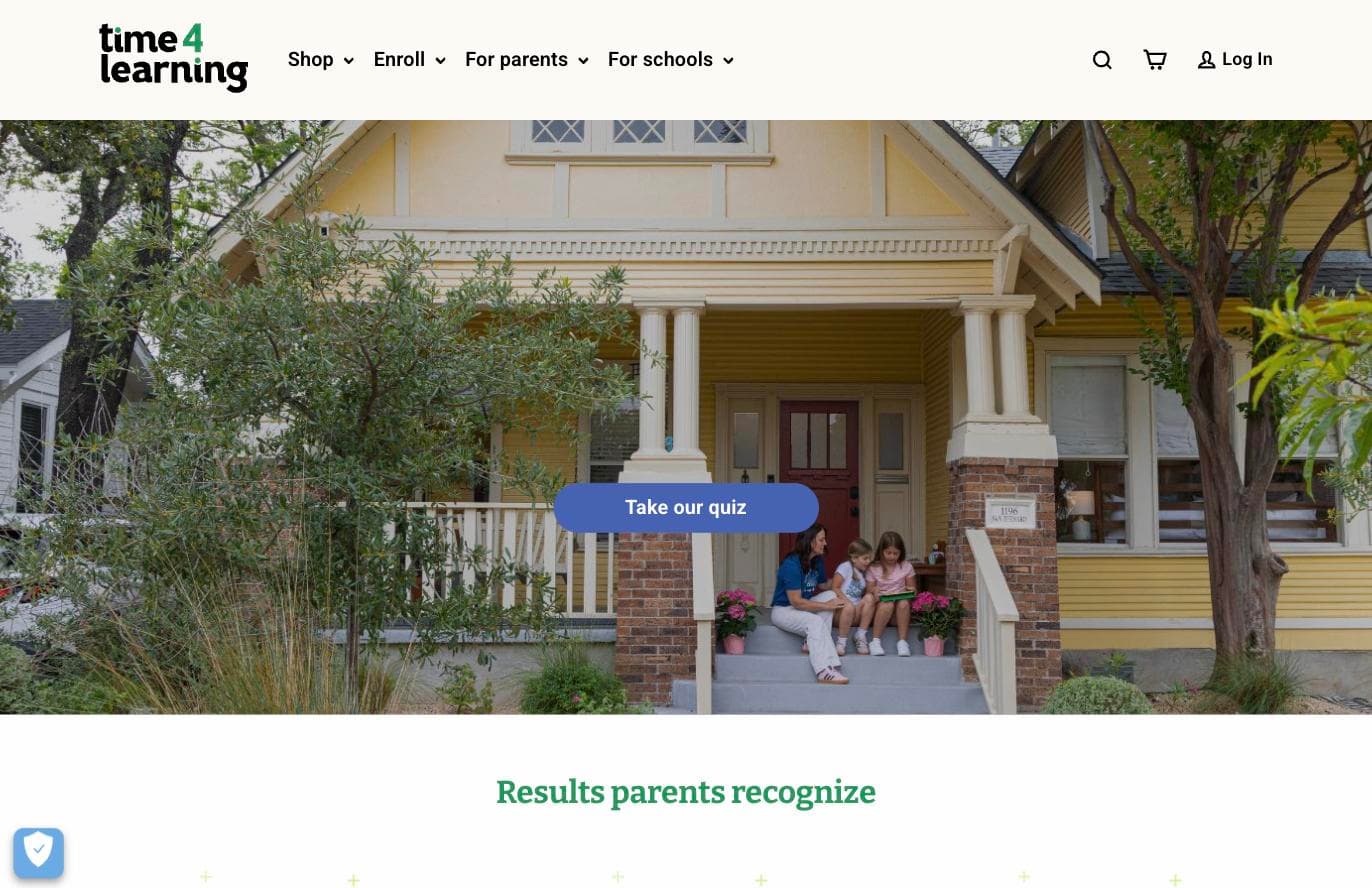
The workhorse of online homeschooling for two decades. Time4Learning covers PreK-12 core subjects with animated, auto-graded lessons for about $479 a year per student ($39.95 a month, all grades, up to seven courses at a time). Parents consistently praise the automatic record-keeping and how independently kids can work.
Worth knowing: the Time4Learning family now also runs Brightspire Virtual School, a Cognia-accredited, NCAA-approved online private school for grades 6-12 at $4,300 a year. It's the step up when you want the curriculum's flexibility but an actual school issuing the transcript.
Pros: low cost for a full core; genuinely self-paced; reporting that holds up for state paperwork; an accredited school option when you need one.
Cons: the math is widely considered too thin to stand alone, and reviewers report billing frustrations, including annual plans that don't refund and progress that disappears if your membership lapses.
Best for: budget-conscious families who plan to supplement math and want a low-commitment core.
3. Miacademy and MiaPrep: Best for Engagement
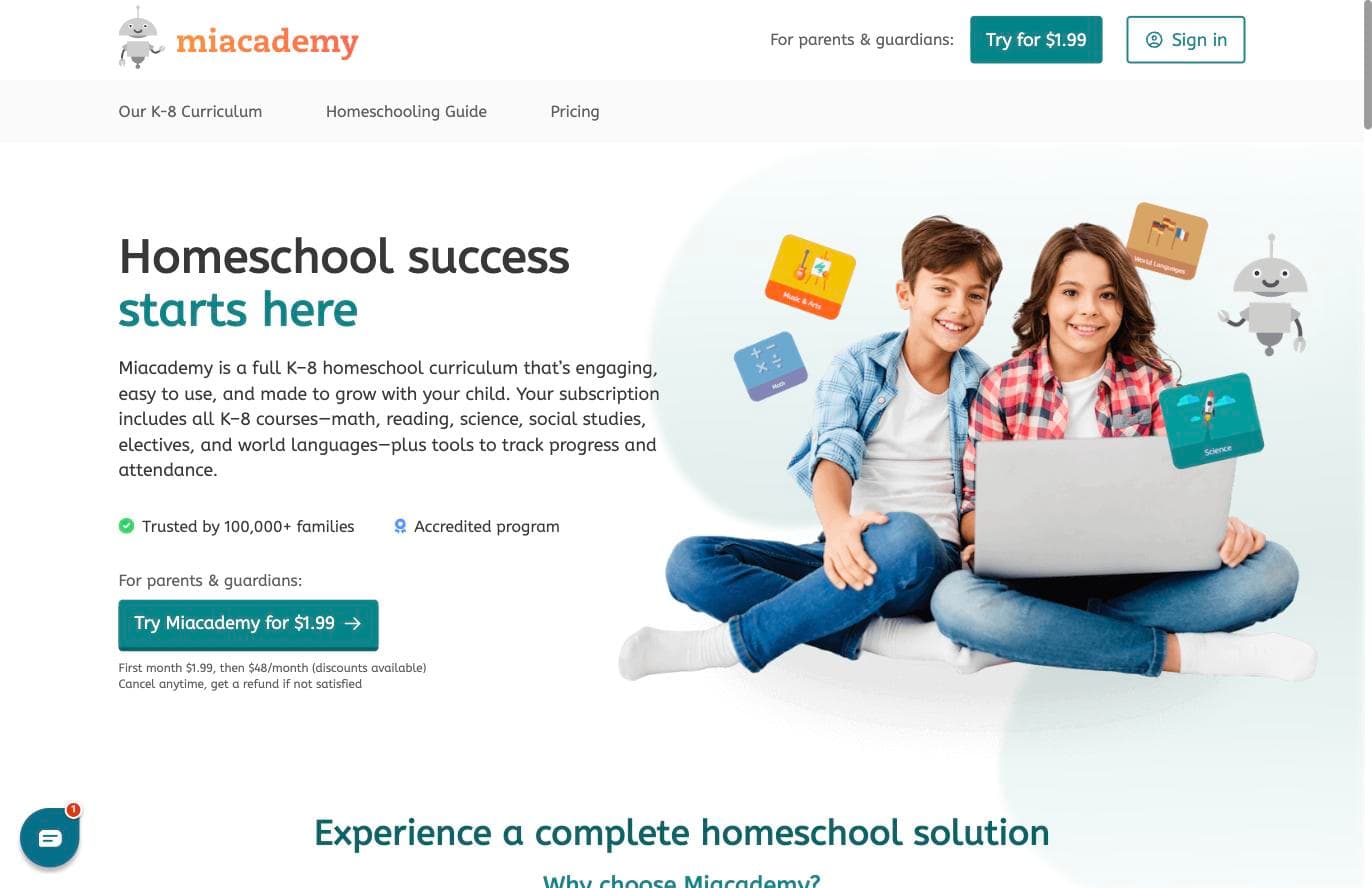
If your child fights school time, Miacademy is the program parents say their kids ask to do. Lessons use real human presenters, and a rewards system plus a moderated kid community keeps motivation high. K-8 runs about $480 a year ($48 a month, first month $1.99); the MiaPrep high school extension is about $650 a year and is WASC-accredited, so it can issue a recognized diploma.
Pros: exceptional engagement; strong parent controls; accredited path for high school.
Cons: pricier than Time4Learning per child; some families find the content light in middle school and supplement for rigor.
Best for: reluctant learners and families that want gamification without sacrificing a diploma option later.
4. Bridgeway Academy: Best Full-Service Online Academy
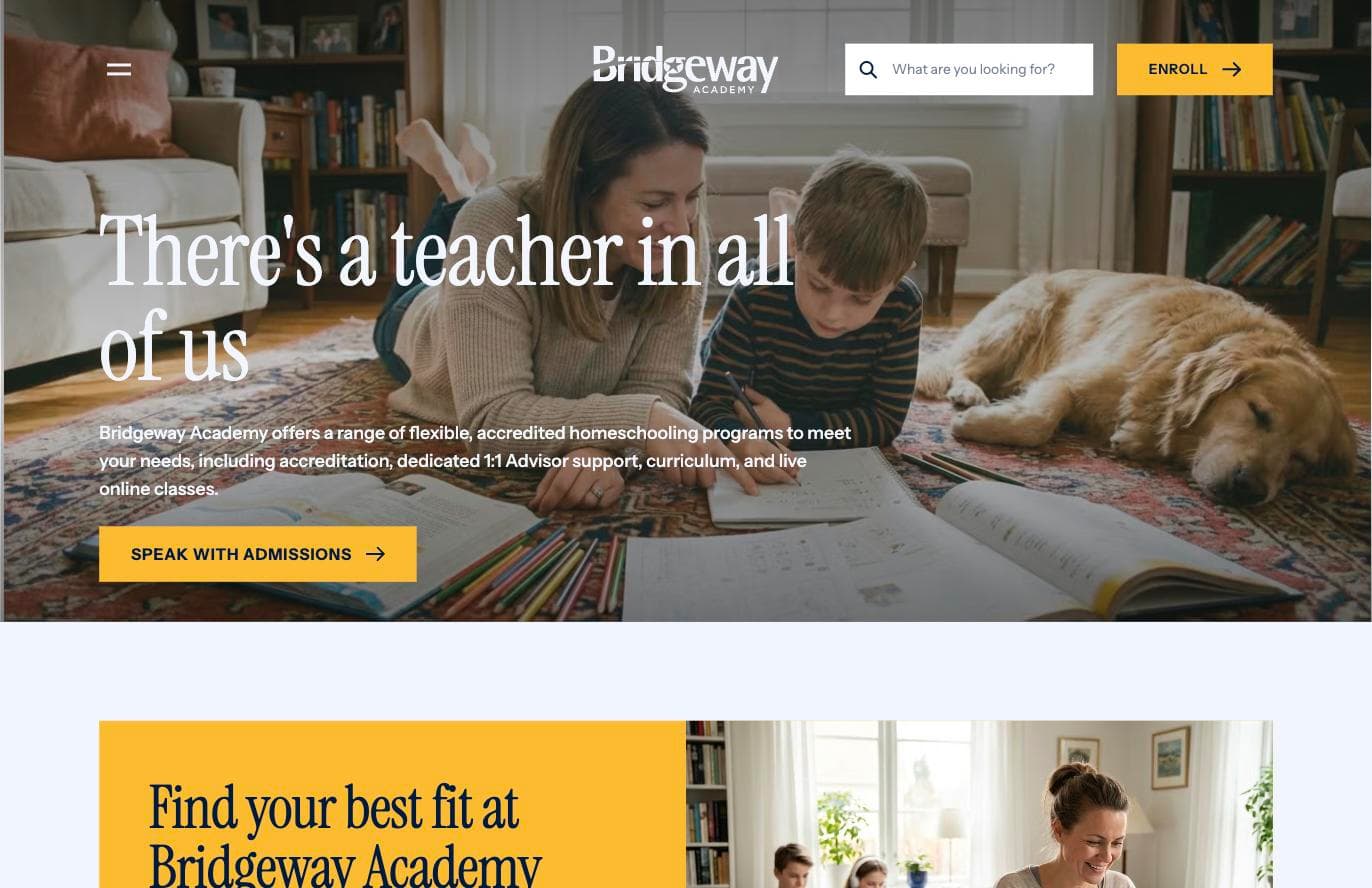
Bridgeway pairs each family with an academic advisor, then builds a customized program from self-paced courses, live online classes, and multiple curriculum styles, with both Christian and secular tracks. It's Cognia-accredited and handles records, transcripts, and diplomas. Pricing is quote-based; most families land between roughly $1,000 and $3,500 per year depending on grade and support tier, so get current numbers directly.
Pros: real human guidance; unusual flexibility for an accredited school; strong high school and neurodivergent-support options.
Cons: costs escalate with add-ons, and some reviewers report rocky platform and support experiences.
Best for: families who want an accredited school that still lets them shape the curriculum.
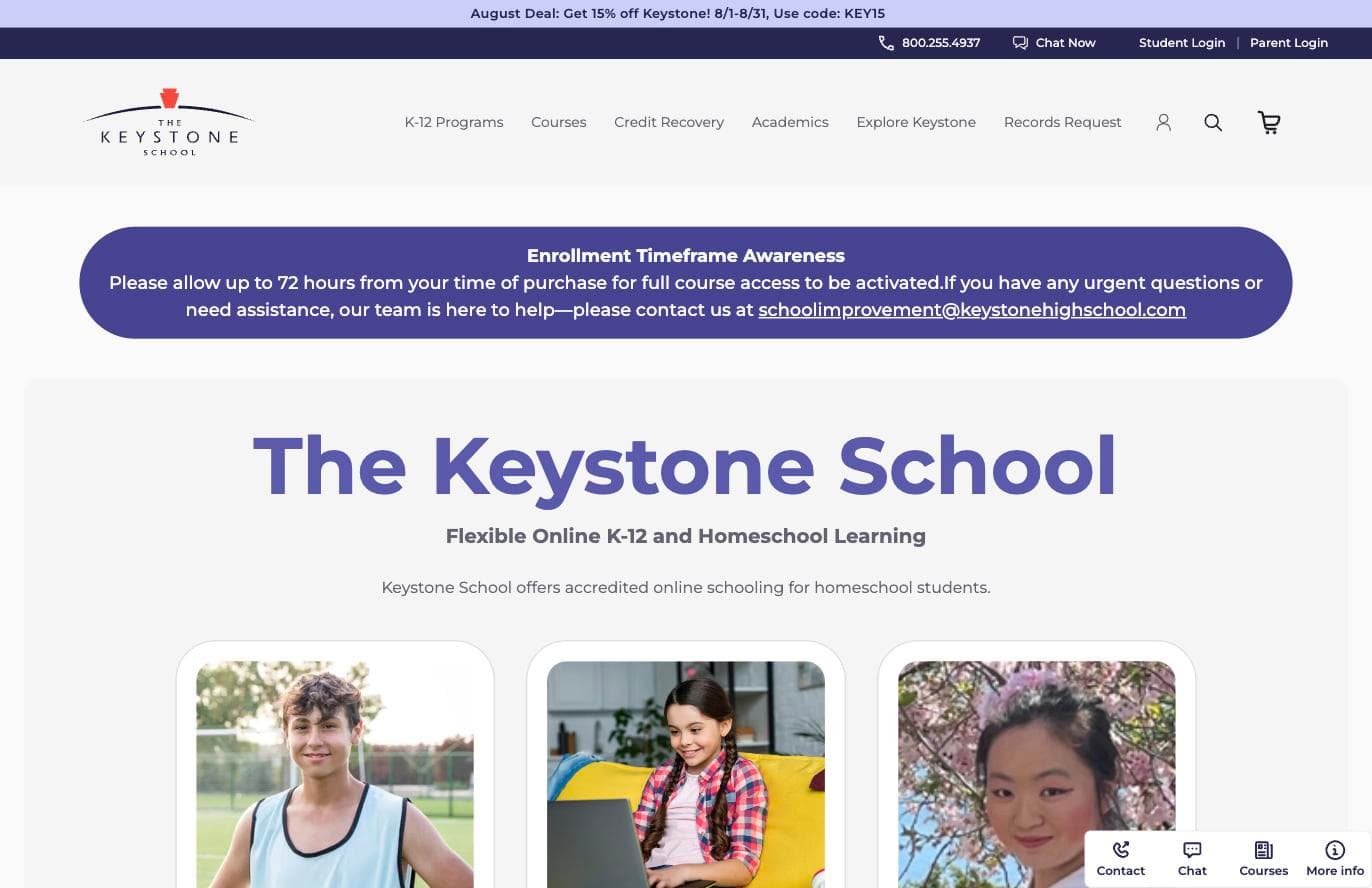
5. Keystone School: Best Accredited Self-Paced High School
Keystone has spent 25 years doing one thing well: accredited, self-paced courses for grades 6-12, with full-time diploma programs around $1,800 to $2,900 per year and individual courses from $289. Accreditation comes from both Cognia and Middle States, which matters when credits need to transfer.
Pros: take one course or a full load; teacher feedback on real assignments; established transcript credibility.
Cons: the platform feels dated, and reviewers warn that transfer-credit evaluation and partial-work policies can be strict. Ask about credit acceptance in writing before enrolling.
Best for: high schoolers who need accredited credits with schedule freedom, including athletes and performers.
6. Abeka Academy: Best Structured Christian Program
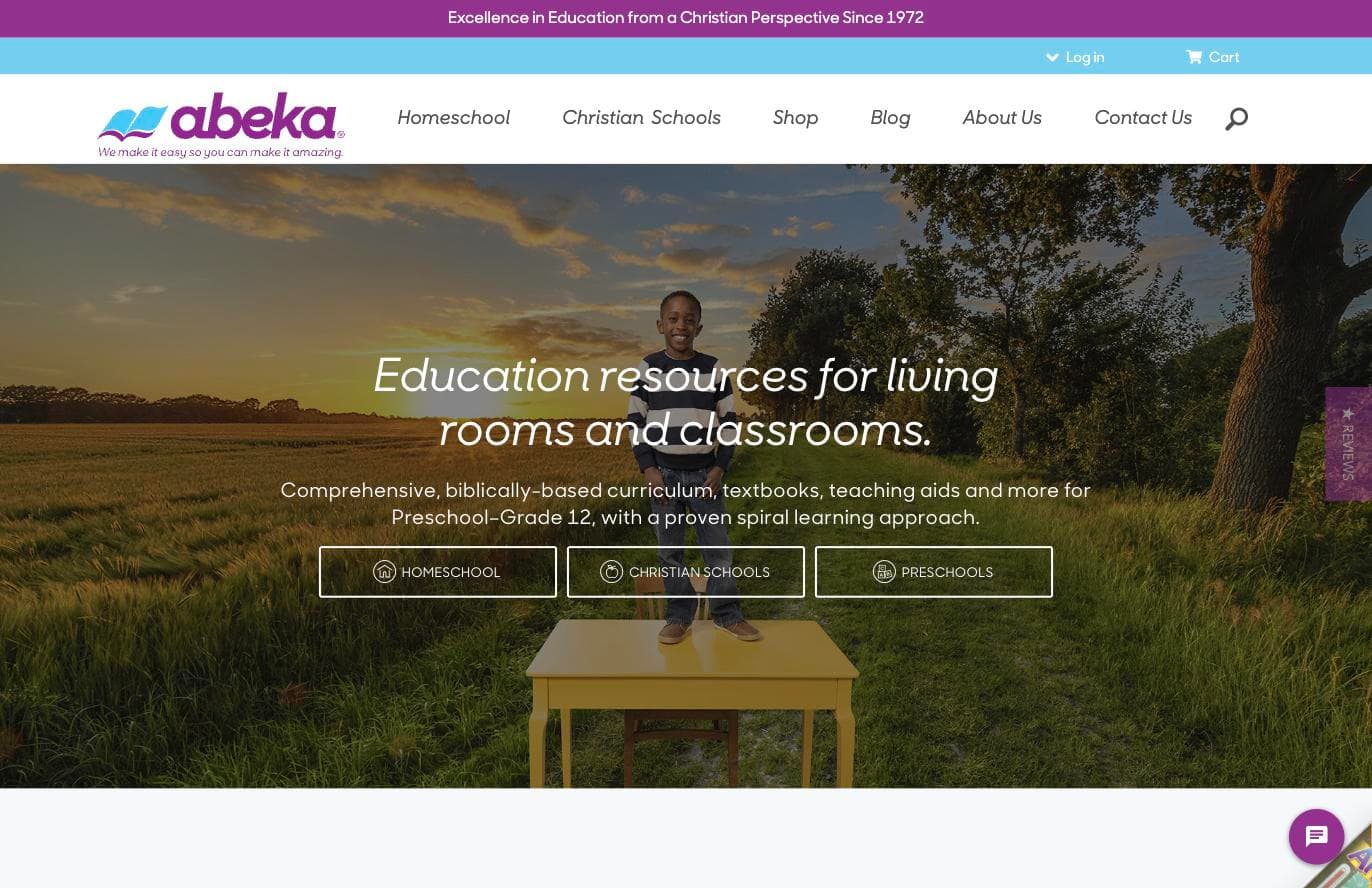
Abeka Academy streams recorded lessons from experienced classroom teachers, backed by one of the most rigorous Christian curricula in print. The accredited option (Middle States and FACCS) starts around $1,300 per year for elementary including books, which is strong value for an accredited program.
Pros: excellent phonics and math foundations; predictable daily structure; accredited diploma track.
Cons: the workload is famously heavy. Parents grade a lot of papers, and veterans openly advise trimming assignments to avoid burnout since the material was designed partly for classrooms.
Best for: families who want traditional Christian education with the discipline of a full school day at home.
7. Oak Meadow: Best Low-Screen Option
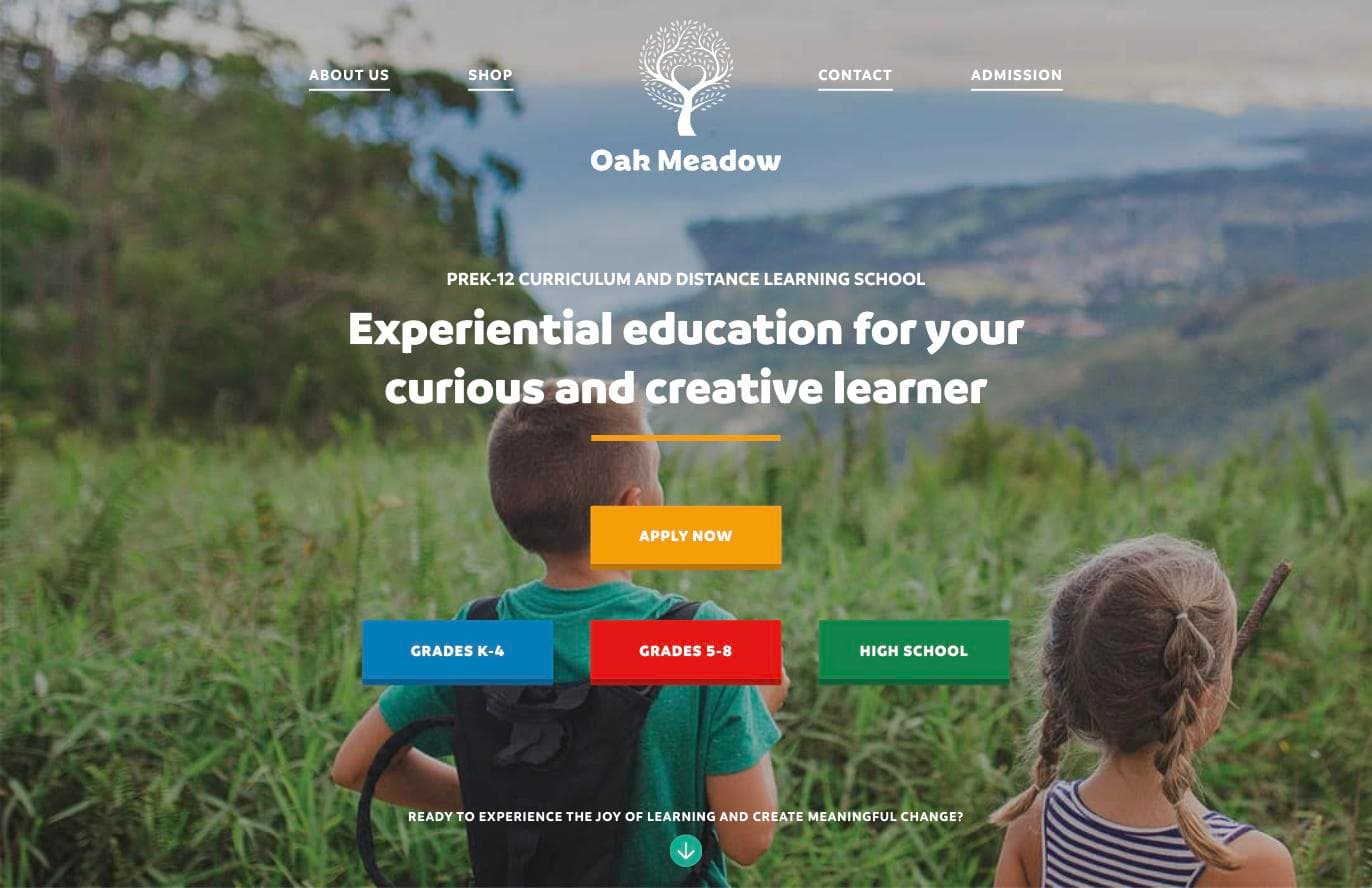
Proof that "online program" doesn't have to mean screen time. Oak Meadow's enrolled program pairs book-based, nature-centered, Waldorf-inspired coursework with an assigned teacher who reviews work and keeps records. It was the first distance school ever accredited by NEASC. Enrolled tuition runs about $2,700 and up per year, plus materials.
Pros: creative, literature-rich, and gentle; real teacher relationships; solves the screen-time worry outright.
Cons: expensive for large families, and many report the math needs supplementing. Loosely structured days frustrate families who want checklists.
Best for: artistic, outdoorsy kids and parents actively trying to reduce screens.
8. K12 (Stride): Best Free Structured Option
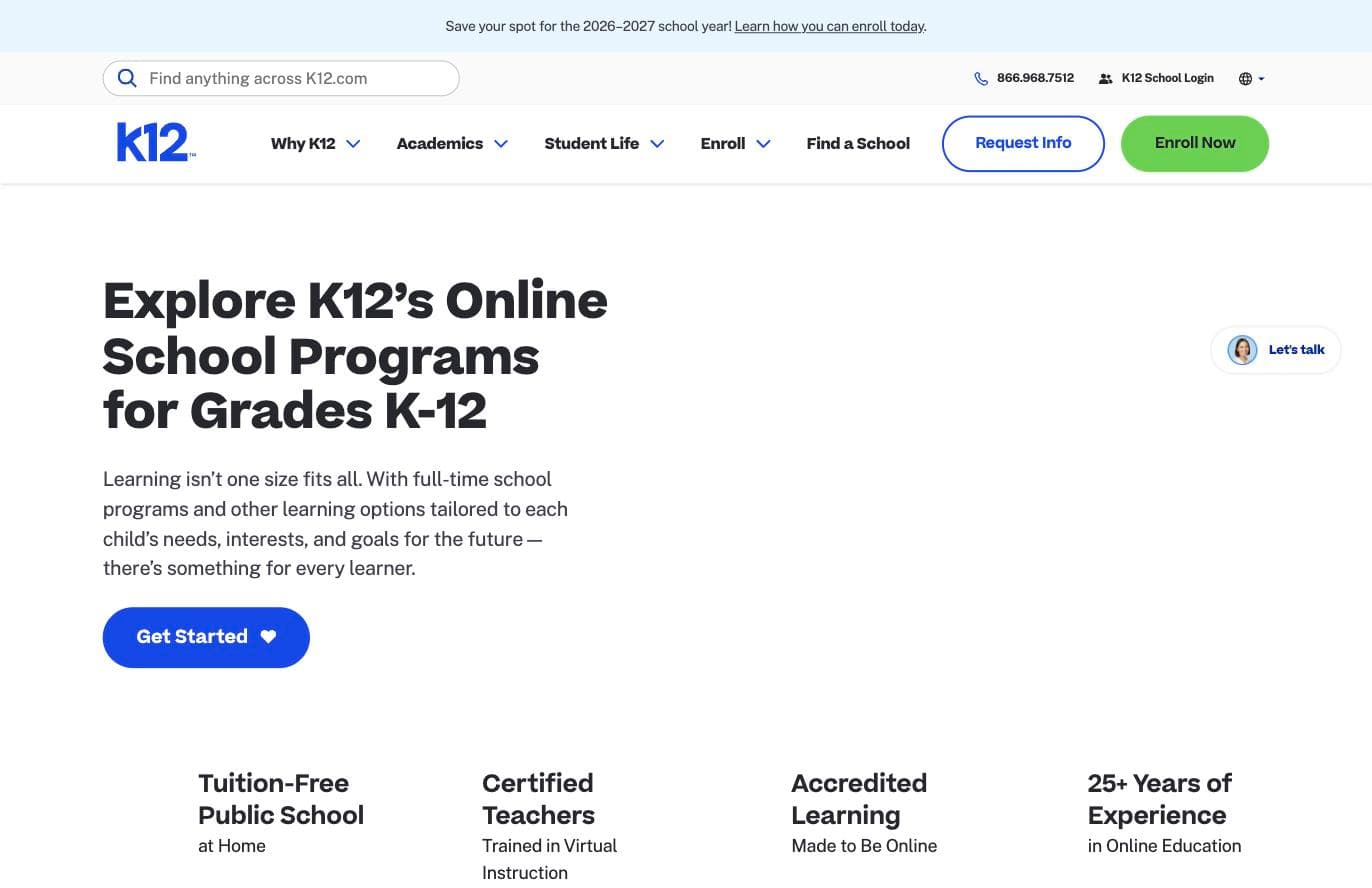
K12 powers tuition-free virtual public schools in around 30 states, plus a private academy near $7,000 per year. The free option delivers certified teachers, a complete curriculum, and real structure at zero cost. Just be clear-eyed: this is public school at home. Expect required hours, state testing, and a heavy "learning coach" role. K12's own guidance puts parent involvement at four to six hours a day in elementary grades.
Pros: free; rigorous; certified teachers and a recognized diploma path.
Cons: not legally homeschooling; inflexible pacing; the parent time commitment shocks families expecting the computer to teach.
Best for: families who want school structure and oversight without paying tuition.
9. Connections Academy: Best Free Option With Live Teachers
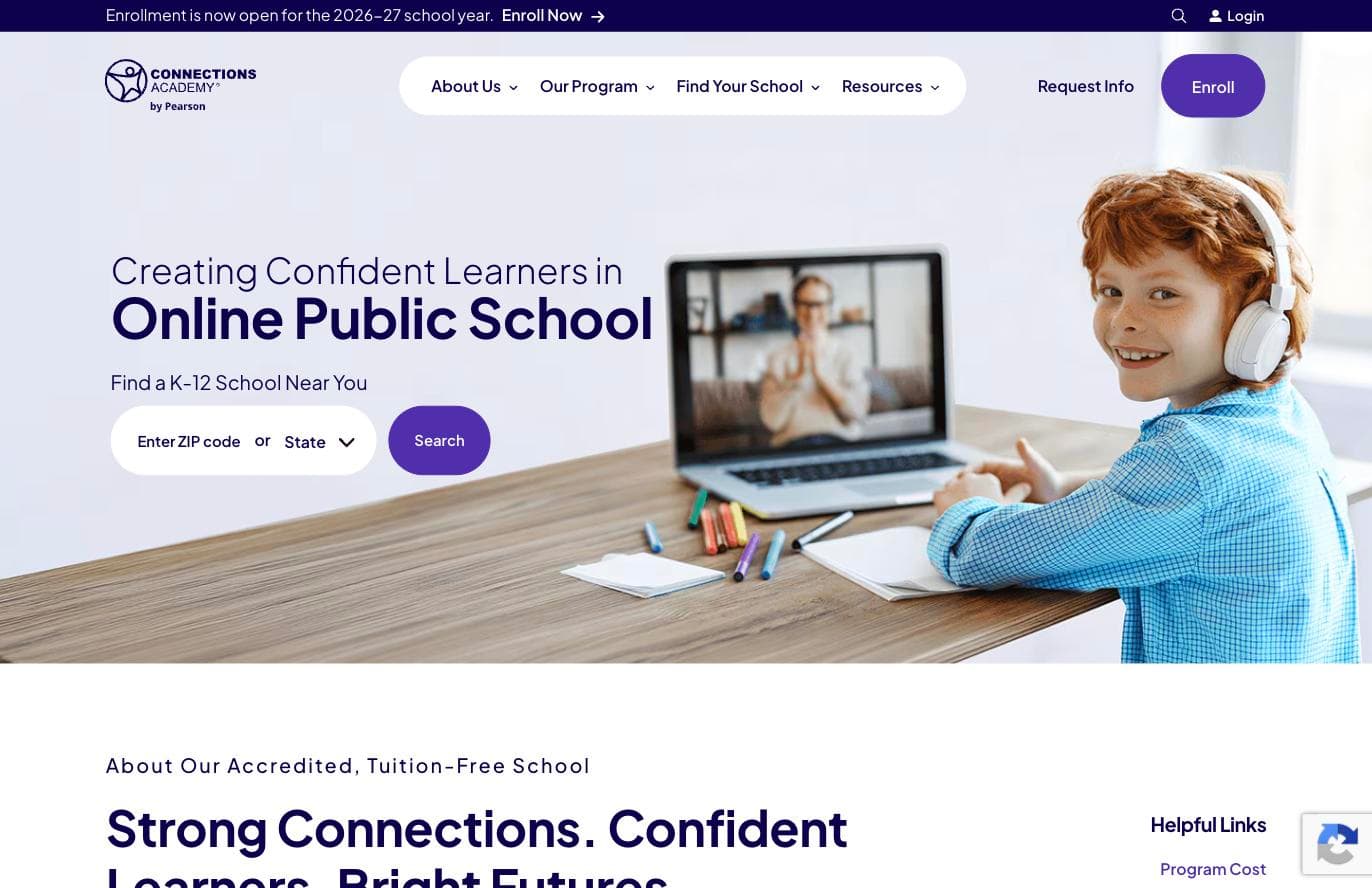
Pearson's Connections Academy operates tuition-free virtual public schools in about 30 states, built around scheduled live lessons rather than mostly-recorded content. For a child who needs real-time teacher contact, it's the strongest free option, and some anxious kids genuinely flourish here after struggling in buildings.
Pros: live instruction; free; structured support and counseling.
Cons: the schedule rules the day. Attendance is tracked, live sessions are mandatory, and parents report heavy daily workloads. Flexibility-seekers tend to withdraw quickly.
Best for: families leaving a brick-and-mortar school who want teachers, not a platform, running the day.
10. Khan Academy: Best Free Supplement
Khan Academy isn't a homeschool program and doesn't pretend to be. It's a free, nonprofit, mastery-based library covering math from kindergarten through calculus, plus science, humanities, and test prep. Used as a spine for math or a patch for any weak subject, it's unbeatable at the price.
Pros: free; genuinely excellent math sequence; mastery tracking shows exactly what's been learned.
Cons: no accountability, no parent lesson plans, no records fit for state reporting, and no diploma. Every bit of structure comes from you.
Best for: filling gaps in any other program on this list, or anchoring math for a motivated self-starter.
Specialty Programs Worth a Look
- Sora Schools — Live, project-based online private school for grades 6-12; Cognia and WASC accredited; roughly $7,500-$17,900/yr with ESA eligibility in several states
- Laurel Springs — WASC-accredited K-12 school popular with athletes and performers; premium pricing that climbs steeply in high school
- Acellus Academy — WASC-accredited, diploma-granting self-paced school around $3,000-$6,000/yr; its cheaper sibling Power Homeschool (~$1,188/yr per student, no teacher support) is unaccredited
- Excel High School — Cognia and Middle States accredited diploma programs near $1,188/yr ($99/mo), including credit recovery
- BJU Press Homeschool — Christian video courses around $1,100 per grade per year; lighter daily workload than Abeka
Does Accreditation Actually Matter?
Less than the marketing suggests, and more than zero. No state requires homeschoolers to use an accredited program, and colleges routinely admit homeschool graduates on the strength of a parent-issued transcript plus test scores[2].
Accreditation earns its keep in three situations. First, transferring back into a public or private high school, where unaccredited credits may be re-tested or refused. Second, NCAA athletics: coursework from an outside online program must come from an NCAA-approved provider for Division I or II eligibility, so athlete families should check the NCAA's list before enrolling anywhere[5]. Third, some ESA programs and international situations prefer accredited providers.
When a program says "accredited," ask which agency. Cognia, WASC, Middle States (MSA-CESS), and NEASC are the recognized names you saw throughout this list. And remember the category rule: Time4Learning and Khan Academy aren't unaccredited schools, they're curricula, and accreditation simply doesn't apply to them.
Paying for It: ESAs Can Cover Online Programs
If sticker prices above made you wince, check your state's education savings account program before ruling anything out. As of the 2024-25 school year, 21 ESA programs across 18 states served nearly 489,000 students[3], and the map keeps expanding, with Texas's program launching for 2026-27. ESA funds can generally pay for online private school tuition and curriculum subscriptions, though they can't be combined with enrollment in a free virtual public school. Rules vary sharply by state, so verify your program's approved-vendor list before committing.
Before You Enroll: A Five-Point Sanity Check
- Confirm the category
Virtual public school, online private school, or self-paced curriculum? Each has different legal status, cost, and freedom.
- Read the billing terms, not the guarantee banner
Look for monthly billing, a real refund window, and a pause option. Annual-only plans are where regret lives.
- Ask about pacing limits in writing
Some "self-paced" programs cap weekly progress or withhold credit on partial work. Fast and slow learners both get burned.
- Price the parent workload honestly
Free structured programs can demand 4-6 hours of your day; "independent" platforms still need you supervising and supplementing.
- Plan your exit before you enter
Know how you'd get records and credits out if you switch mid-year. Most families change programs at least once.
The Bottom Line
The best online homeschool program is the one that matches your category, your budget, and your child, in that order. Decide first whether you want a free public structure, an accredited private school, or a self-paced platform you control. Then trial your top two and let real use decide.
Whatever delivers the lessons, the program around them still has to run: state requirements, attendance, records, transcripts, and planning. That's the layer Numa handles for $199 a year, with whatever curriculum your family loves. Compare a couple of trials this week, and you can have a working program before the month is out.
Frequently Asked Questions
Ready to simplify your homeschool?
Numa helps you track compliance, manage records, and plan your curriculum—all in one place.
Sign Up